
The 50/30/20 Rule Explained: Where It Holds Up and Where It Doesn't

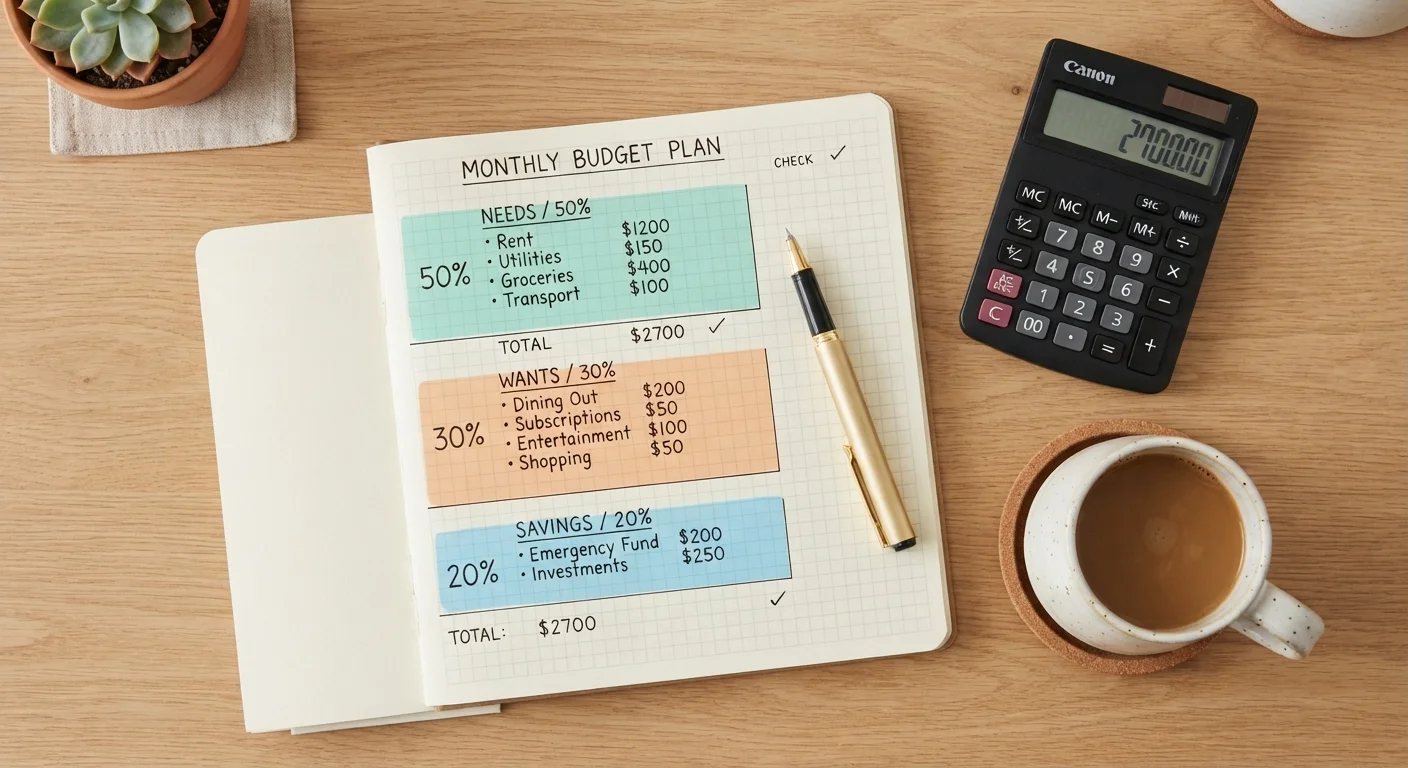
Photo: DockedReads.com | Information Made Easy editorial
Key Takeaways
- The 50/30/20 rule splits after-tax income into needs (50%), wants (30%), and savings or debt repayment (20%).
- It works best as a starting point, not a rigid prescription—your situation will likely require adjustments.
- High housing costs in many U.S. cities often push needs well above 50%, requiring tradeoffs in other categories.
- Lower-income households may find the 20% savings target difficult to meet without first reducing essential expenses.
- The rule's real value is in prompting regular reflection on where your money goes and why.
How the Rule Works in Practice
The 50/30/20 rule was popularized by U.S. Senator Elizabeth Warren and her daughter Amelia Warren Tyagi in their 2005 book All Your Worth. Its appeal is its simplicity: take your monthly after-tax income, split it into three buckets, and you have a functional budget without a spreadsheet full of line items.
Needs (50%): Rent or mortgage, groceries, utilities, health insurance premiums, minimum loan payments, and essential transportation costs. These are non-negotiable expenses that persist regardless of your preferences.
Wants (30%): Dining out, streaming subscriptions, gym memberships, travel, and non-essential shopping. These improve quality of life but could be reduced if necessary.
Savings and debt repayment (20%): Emergency fund contributions, retirement account deposits, and any debt payments above the minimums. This category is the engine of long-term financial health.
Before you even apply percentages, it helps to have a clear picture of your income and fixed expenses. If you haven't done that groundwork yet, a pre-budgeting checklist can help you gather the numbers you need.
30%+
U.S. renters spending over 30% of income on housing
According to the U.S. Census Bureau's American Community Survey, more than 40% of U.S. renters are considered cost-burdened, spending over 30% of income on housing.
~36%
Americans with no dedicated emergency savings
Federal Reserve surveys on household economics have consistently found that a substantial share of U.S. adults would struggle to cover an unexpected $400 expense, underscoring why the 20% savings target is ambitious for many.
Where the 50/30/20 Rule Holds Up
For households with moderate, stable incomes and average housing costs, the 50/30/20 rule offers genuine utility. It provides structure without demanding obsessive tracking, making it easier to sustain over time. Budgets people actually maintain outperform technically perfect budgets that are abandoned after a month—a principle explored in depth in budgeting habits that hold over time.
The rule is also useful as a diagnostic tool. If your needs are consistently eating 65% of your income, you can see immediately that housing, transportation, or another essential is crowding out savings. That clarity is valuable even when the ideal percentages aren't achievable.
Where the Rule Breaks Down
The 50/30/20 rule was conceived at a time when U.S. housing costs were meaningfully lower relative to income. Today, renters in high-cost metro areas—New York, San Francisco, Seattle—often spend 40–50% of take-home pay on housing alone, before factoring in utilities, food, and transportation. That leaves little room for the rule to function as intended.
The rule also assumes a stable, predictable income. Freelancers, gig workers, and anyone with variable earnings may find percentage-based thinking useful in principle but impractical month-to-month without adjustments. A fixed-percentage framework can obscure the reality that a slow month requires pulling back across all categories, not just the wants bucket.
Finally, the 20% savings target, while reasonable for middle-income earners, can feel aspirational rather than actionable for households where every dollar is already committed to basic expenses. Acknowledging this gap honestly matters—setting an unreachable target can discourage people from saving anything at all.
A Simple Way to Adjust the Rule
For those weighing whether a percentage method suits their life better than a dollar-by-dollar approach, a comparison of zero-based and percentage budgeting is worth reading before committing to either.
Adapting the Rule to Your Reality
The 50/30/20 rule is best treated as a starting conversation, not a final answer. If your needs reliably exceed 50%, consider whether any fixed costs can be reduced over time—refinancing, adjusting insurance, or renegotiating recurring expenses—rather than simply accepting the overage indefinitely.
If saving 20% isn't feasible right now, starting with whatever percentage is realistic—5%, 10%—and automating it builds the habit first. Increasing the percentage as income grows is a more durable strategy than waiting until the full 20% is achievable in one step.
Once you have a framework in place, a monthly budget review routine will help you track whether your allocations are still working and where adjustments are needed.
“A budget is telling your money where to go instead of wondering where it went.”
— Dave Ramsey, Personal finance author and radio host
This article is for general informational and educational purposes only and does not constitute personalized financial or investment advice. Consult a qualified financial adviser for guidance specific to your situation.
Frequently Asked Questions
The content on this site is for informational purposes only and is not a substitute for professional advice. Always consult a qualified professional for guidance specific to your situation.