
Envelope Budgeting in a Digital Age: Does the Old System Still Work?

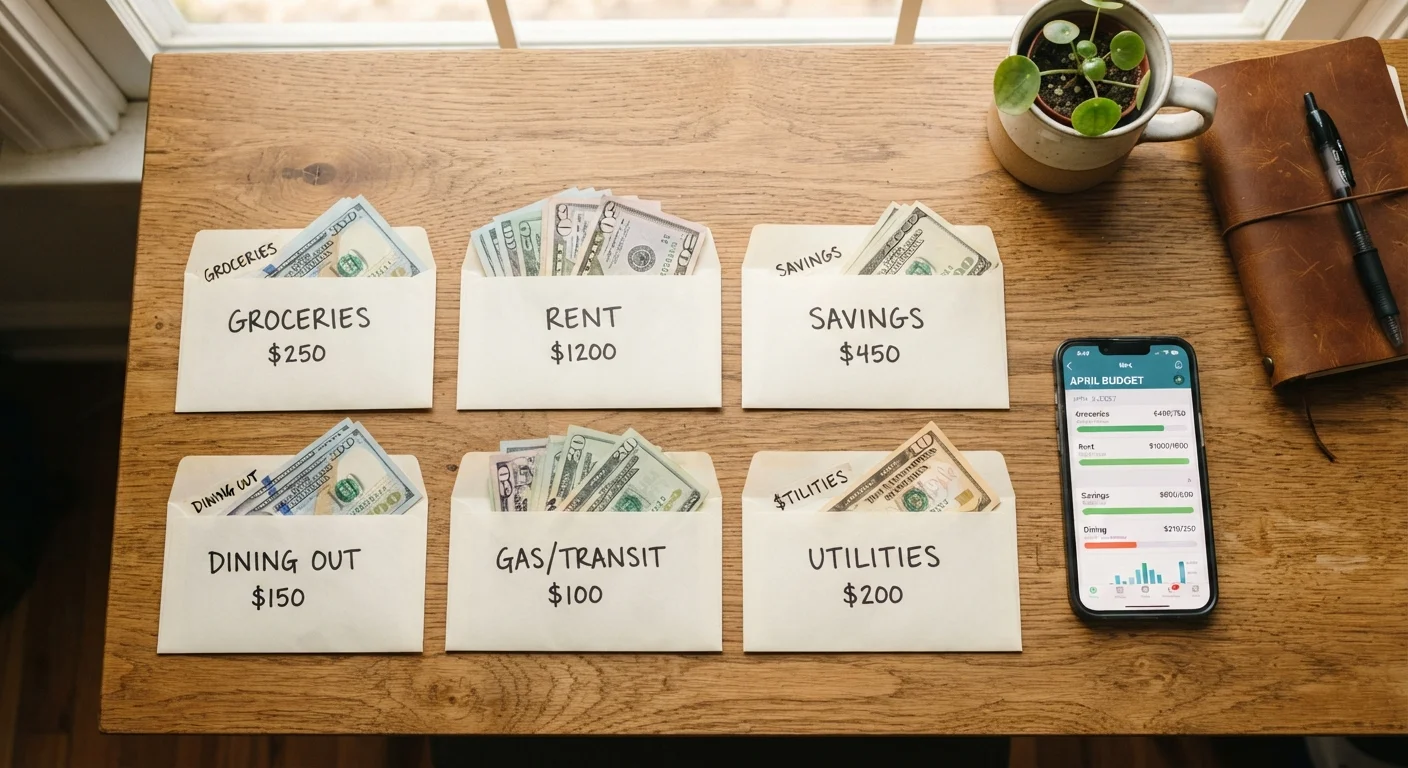
Photo: DockedReads.com | Information Made Easy editorial
Key Takeaways
- Envelope budgeting divides your income into spending categories using physical cash or digital equivalents.
- The system's tactile nature makes overspending immediately visible, which can curb impulsive purchases.
- Carrying cash and managing physical envelopes creates friction that many people find impractical today.
- Digital envelope apps preserve the core logic while accommodating card-based spending.
- The method works best for people with variable spending habits who need a clear visual limit.
Spending limits are visible and tangible in real time
Physical envelopes show exactly how much remains in a category without logging into any system, reducing the mental load of tracking.
Encourages proactive allocation before spending occurs
Dividing income upfront forces deliberate category planning, which is consistently associated with lower overspending in behavioral research.
Cash friction naturally reduces impulsive purchases
Studies in consumer behavior suggest people feel the cost of purchases more acutely with physical cash, which can moderate unplanned spending.
Simple enough to start without tools or apps
The method requires only labeled envelopes and cash — no software, subscription, or learning curve.
Adaptable to digital equivalents without losing core logic
Virtual envelope apps replicate the category-cap structure for card users, preserving the system's behavioral benefits in a cashless environment.
Incompatible with most digital and online payments
Rent, subscriptions, and online purchases cannot be paid from a physical envelope, requiring a parallel system that adds complexity.
Carrying significant cash poses a loss or theft risk
Unlike bank accounts or cards, lost or stolen cash has no insurance or dispute process, creating a real financial vulnerability.
Refilling envelopes each cycle is time-consuming
Withdrawing, sorting, and labeling cash regularly demands a consistent time investment that many people underestimate at the outset.
Difficult to manage with irregular or variable income
When paycheck amounts fluctuate, deciding how much to load into each envelope each cycle requires additional judgment and recalculation.
No automatic record-keeping for future reference
Physical envelopes leave no transaction history, making it harder to spot spending patterns or verify past allocations without separate notes.
How the Envelope System Works
The envelope method is one of the oldest structured budgeting approaches still in wide use. The mechanics are straightforward: when you receive your paycheck, you divide the money into labeled envelopes — one for groceries, one for gas, one for dining out, and so on. Each envelope holds exactly the amount you've decided to spend in that category. When an envelope is empty, spending in that category stops until the next pay period.
The system belongs to a broader family of zero-based allocation strategies, where every dollar is assigned a purpose before the month begins. For a detailed comparison of how that philosophy applies across different frameworks, see Zero-Based Budgeting vs. the Percentage Method.
Historically, the method gained popularity in households where bank accounts were less accessible and cash was the primary medium of exchange. Today, a growing number of budgeting apps replicate the envelope logic digitally — assigning virtual funds to categories without requiring physical currency.
The Real Advantages of Envelope Budgeting
Spending limits are visible and tangible in real time
Physical envelopes show exactly how much remains in a category without logging into any system, reducing the mental load of tracking.
Encourages proactive allocation before spending occurs
Dividing income upfront forces deliberate category planning, which is consistently associated with lower overspending in behavioral research.
Cash friction naturally reduces impulsive purchases
Studies in consumer behavior suggest people feel the cost of purchases more acutely with physical cash, which can moderate unplanned spending.
Simple enough to start without tools or apps
The method requires only labeled envelopes and cash — no software, subscription, or learning curve.
Adaptable to digital equivalents without losing core logic
Virtual envelope apps replicate the category-cap structure for card users, preserving the system's behavioral benefits in a cashless environment.
The psychological dimension of cash is well-documented in behavioral economics research: spending physical money tends to feel more concrete than swiping a card, which can reduce impulsive purchases. Envelope budgeting harnesses that friction deliberately.
The visual feedback is immediate. You don't need to log in to an app or reconcile a bank statement — you can see and feel how much remains. For people who find numbers on screens abstract, this tangibility is a meaningful advantage.
The method also forces proactive allocation. Rather than tracking what you spent and hoping for the best, you decide category limits upfront. This aligns with the habits described in budgeting habits that hold over time, where intentional planning consistently outperforms reactive tracking.
Where the System Shows Its Age
Incompatible with most digital and online payments
Rent, subscriptions, and online purchases cannot be paid from a physical envelope, requiring a parallel system that adds complexity.
Carrying significant cash poses a loss or theft risk
Unlike bank accounts or cards, lost or stolen cash has no insurance or dispute process, creating a real financial vulnerability.
Refilling envelopes each cycle is time-consuming
Withdrawing, sorting, and labeling cash regularly demands a consistent time investment that many people underestimate at the outset.
Difficult to manage with irregular or variable income
When paycheck amounts fluctuate, deciding how much to load into each envelope each cycle requires additional judgment and recalculation.
No automatic record-keeping for future reference
Physical envelopes leave no transaction history, making it harder to spot spending patterns or verify past allocations without separate notes.
The most obvious friction point is the dominance of digital payments. Rent, utilities, streaming subscriptions, and online purchases don't accommodate cash. Attempting a strict envelope system today often means maintaining a parallel mental accounting system for card-based expenses — which undermines the simplicity the method promises.
There are also practical safety concerns: carrying large amounts of cash to fund monthly envelopes introduces risk of loss or theft, with no recourse available the way a disputed card charge might offer.
Digital Envelope Apps: The Key Trade-Off
For households with irregular income — freelancers, hourly workers with variable shifts — refilling envelopes each pay cycle can become administratively cumbersome without a consistent baseline to divide.
Making Envelope Budgeting Work in a Digital World
The most practical path for most people today is a hybrid approach: apply envelope logic to discretionary, cash-friendly spending categories (groceries, dining, personal care) while handling fixed digital expenses — rent, insurance, subscriptions — through standard account management.
Digital envelope apps carry the core methodology forward without requiring physical currency. These tools let you assign funds to named categories, track spending against each allocation in real time, and receive alerts when a category runs low. The behavioral benefit — pre-commitment and visible limits — is largely preserved.
~70%
US adults who primarily use cards over cash
According to Federal Reserve payment studies, the majority of US consumers now make most of their everyday transactions with debit or credit cards rather than cash.
1 in 3
Adults who report going over budget monthly
Survey data from financial literacy organizations consistently finds that a significant share of US adults exceed their intended monthly spending in at least one category.
Whichever format you choose, pairing it with a structured monthly review sharpens its effectiveness considerably. The monthly budget review walkthrough outlines how to evaluate category performance and adjust allocations without abandoning the system entirely. You might also consider how envelope logic fits within a broader tracking approach — paper ledger, spreadsheet, or app explores compatible tools. For a full picture of how this fits into your overall financial plan, the complete personal budgeting framework is a useful reference.
This article is for general informational and educational purposes only. It does not constitute personalised financial, investment, tax, or legal advice. Consult a qualified financial professional before making decisions about your individual circumstances.
The content on this site is for informational purposes only and is not a substitute for professional advice. Always consult a qualified professional for guidance specific to your situation.