
Foam, Felt, or Rubber: Choosing the Right Weatherstripping Material

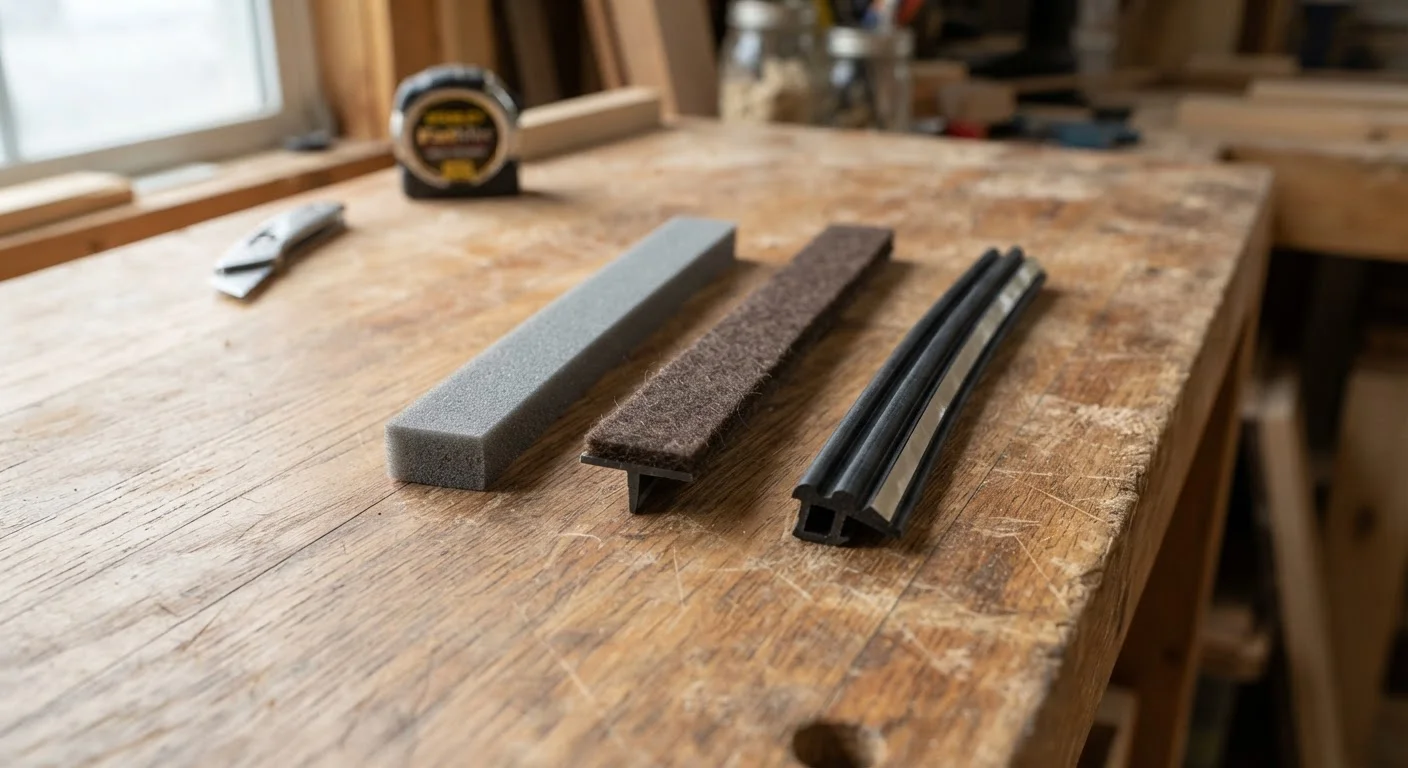
Photo: DockedReads.com | Information Made Easy editorial
Key Takeaways
- Foam weatherstripping is the most affordable and easiest to install, but typically the least durable.
- Felt is a traditional option suited to low-traffic areas but absorbs moisture and wears quickly.
- Rubber and vinyl weatherstripping offer the best durability and weather resistance for exterior doors.
- The right material depends on where it's applied, how much traffic the opening gets, and your climate.
- Mismatched materials are one of the most common reasons weatherstripping fails prematurely.
Why the Material You Choose Matters
Weatherstripping creates a seal between a moving door or window and its frame, blocking drafts, moisture, and outdoor noise. But the seal is only as good as the material behind it. Choose one that compresses too easily, absorbs water, or stiffens in cold weather, and you'll be replacing it within a season or two.
Three broad categories dominate most home improvement projects: foam, felt, and rubber (which includes vinyl and silicone variants). Each has a clear performance profile, and understanding those profiles is the key to making a choice that holds up. As we cover in our article on common weatherstripping mistakes, applying the wrong material to the wrong location is one of the most frequent errors homeowners make.
| Foam | Felt | Rubber / Vinyl | |
|---|---|---|---|
| Typical lifespan | 1–3 years | 1–2 years | 5–10+ years |
| Moisture resistance | Low (open-cell); moderate (closed-cell) | Poor — absorbs water | Excellent |
| Temperature flexibility | Moderate | Poor in extremes | Good to excellent (EPDM, silicone) |
| Ease of installation | Very easy — peel-and-stick | Easy | Moderate — may require nailing or screwing |
| Best use case | Windows, interior doors | Interior or low-traffic doors | Exterior doors, garages |
| Relative cost | Lowest | Low | Moderate to higher |
Foam Weatherstripping: Accessible but Limited
Foam weatherstripping — typically open-cell or closed-cell polyurethane or polyethylene foam — is the most widely available option and the easiest to apply. It comes in rolls with a self-adhesive backing, sticks to most clean, dry surfaces, and can be cut to length with scissors. For a first-time DIYer, that simplicity is genuinely useful.
The trade-off is durability. Open-cell foam absorbs moisture and breaks down with repeated compression, often showing wear within one to three years. Closed-cell foam performs somewhat better but still compresses permanently over time, reducing its sealing effectiveness. Foam is best suited to low-traffic windows, sash windows, attic hatches, and interior doors where temperature swings are moderate and the strip won't be crushed thousands of times a year.
Test Before You Stick
Foam is also an acceptable temporary fix for an exterior door while you source a more durable replacement — just don't leave it there through a full winter season if you want reliable performance.
Felt Weatherstripping: Traditional but Moisture-Prone
Felt is one of the oldest weatherstripping materials and was common in homes built before the 1970s. It's made from compressed wool or synthetic fibers and is typically sold in rolls or as pre-cut strips, sometimes with a metal or wood reinforcing spine.
Felt provides a soft, conforming fit and can work reasonably well on interior doors, cabinet doors, and garage-side entry doors in dry climates. However, it has two significant weaknesses: it absorbs water readily and can grow mold or mildew in humid environments, and it wears down faster than any other common material under regular friction. In regions with seasonal humidity or temperature extremes — which covers most of the continental U.S. — felt is rarely the right call for exterior applications.
If you're restoring an older home and want a historically appropriate material, felt with a metal reinforcing channel can be a reasonable choice for double-hung windows. Elsewhere, more modern materials will outlast it.
Rubber and Vinyl: Built for Durability
Rubber weatherstripping — including EPDM rubber, neoprene, silicone, and vinyl — is the most durable category and the preferred choice for exterior doors, garage doors, and high-traffic entryways. These materials maintain their flexibility across a wide temperature range, resist moisture and UV exposure, and recover their shape after compression far better than foam or felt.
Within the rubber category, there are several common profiles:
- V-strip (tension seal): A folded strip that springs open against a door or window edge. Works well on the sides of sliding windows and the edges of doors in relatively even frames.
- Bulb or tubular seal: A hollow tube attached to a mounting flange. Excellent compression seal for exterior door frames; can compensate for minor frame irregularities.
- Door sweeps: Attached to the bottom of a door, these often use rubber or vinyl blades to seal against the threshold.
EPDM and silicone generally outperform plain vinyl in cold climates, as vinyl can stiffen and crack at very low temperatures. If you're in a northern climate with sustained freezing winters, EPDM or silicone is worth the modest additional cost.
Vinyl Can Stiffen in Cold Climates
Matching Material to Location: A Practical Summary
The most reliable framework for choosing weatherstripping material is to think about three factors: traffic level (how often the door or window opens), environmental exposure (exterior vs. interior, wet vs. dry climate), and frame condition (even gaps vs. irregular surfaces).
High-traffic exterior doors in variable climates benefit most from rubber or vinyl profiles. Windows that are opened only occasionally — especially interior or secondary windows — can be sealed effectively and affordably with foam. Felt should be reserved for dry, low-friction applications where appearance or historical accuracy matters more than longevity.
Before purchasing, also measure your gap width carefully. Weatherstripping that's too thick will make a door hard to close; too thin and it won't form a seal. Most foam and rubber products list a compression range on the packaging — match that to your measured gap for the best result. Taking an extra five minutes at this stage is far less work than pulling off and replacing a strip that was never going to fit correctly.
Up to 30%
Heating/cooling energy lost through gaps
The U.S. Department of Energy estimates that drafts through gaps around doors and windows can account for a significant share of a home's energy loss.
2–5 years
Average replacement interval for foam strips
Home maintenance guides generally suggest inspecting foam weatherstripping every one to two years and replacing it when it no longer springs back after compression.
The content on this site is for informational purposes only and is not a substitute for professional advice. Always consult a qualified professional for guidance specific to your situation.