
Laminate vs. Engineered Hardwood Flooring

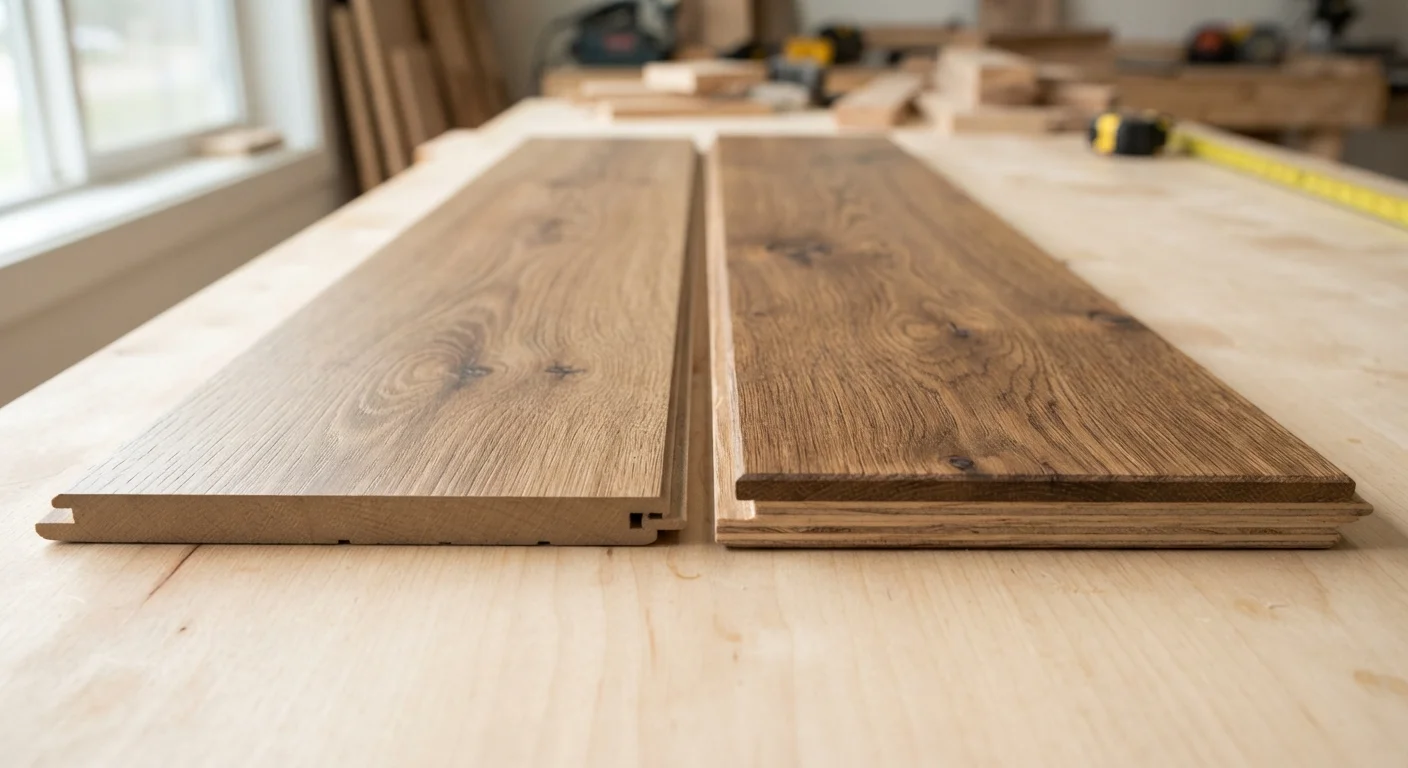
Photo: DockedReads.com | Information Made Easy editorial
Key Takeaways
- Laminate uses a photographic layer over fiberboard; engineered hardwood contains a real wood veneer bonded to plywood layers.
- Engineered hardwood can typically be refinished once or twice; laminate cannot be refinished at all.
- Laminate generally costs less per square foot installed than engineered hardwood.
- Both options handle moderate humidity better than solid hardwood, but neither is fully waterproof.
- Installation methods overlap — both commonly use floating click-lock systems suitable for DIYers.
How Each Floor Is Actually Built
Understanding the construction of each product explains almost every performance difference between them.
Laminate flooring is a synthetic product built in layers: a wear layer of aluminum oxide sits on top of a high-resolution photographic film that mimics wood grain, all bonded to a high-density fiberboard (HDF) core, with a backing layer for stability. No real wood is involved in most standard laminate — what you see is a printed image.
Engineered hardwood is a genuine wood product. A real hardwood veneer (commonly 1–4 mm thick) is adhered to multiple cross-directional plywood layers beneath it. The cross-ply construction gives engineered hardwood far greater dimensional stability than solid hardwood planks, meaning it expands and contracts less with humidity changes.
This structural difference is the root cause of the two floors' different behaviors in moisture, durability, and refinishing scenarios.
| Criterion | Laminate | Engineered Hardwood |
|---|---|---|
| Real wood content | None — photographic layer | Yes — hardwood veneer top layer |
| Typical material cost | Lower per sq. ft. | Moderate to higher per sq. ft. |
| DIY installation | Yes — click-lock float | Yes — click-lock, glue, or staple |
| Refinishable | No | Yes (1–2 times, thick veneer) |
| Scratch resistance | High (AC3+ wear layer) | Moderate — depends on species |
| Moisture tolerance | Surface-resistant; core vulnerable | Better than solid; not waterproof |
| Typical lifespan | 15–25 years | 25–30+ years with refinishing |
| Below-grade suitability | Generally yes | Check manufacturer guidance |
Cost, Installation, and DIY Suitability
Both flooring types are genuine DIY-friendly options, which is one reason they've overtaken solid hardwood in many home renovation projects.
Cost: Laminate typically runs lower per square foot for materials, and installation labor (when hired out) is comparably priced. Engineered hardwood material costs more, reflecting the real wood content, though prices vary widely by species and veneer thickness.
Installation methods: Both products commonly use floating click-lock systems that don't require glue or nails, snapping planks together over an underlayment pad. This system sits on top of the subfloor rather than being attached to it, which makes it accessible for most confident DIYers. Engineered hardwood can also be glued down or stapled, which is useful when installing over concrete slabs or when you want a more solid feel underfoot.
Subfloor requirements: Both demand a flat, clean, and dry subfloor. High spots or dips of more than 3/16 inch over a 10-foot span should be corrected before laying either product to prevent click joints from failing over time.
AC3–AC5
Laminate wear rating for residential use
The Abrasion Criteria (AC) rating system helps consumers compare laminate durability; AC3 suits general residential use, AC4–5 for heavy traffic.
1–4 mm
Typical engineered hardwood veneer thickness
Veneer thickness directly determines whether a floor can be refinished; thicker veneers (3 mm+) allow light sanding and re-coating.
Moisture Resistance, Durability, and Lifespan
Neither laminate nor engineered hardwood is waterproof in the way tile or luxury vinyl plank (LVP) can be — both are wood-based and will suffer from standing water or prolonged moisture exposure. That said, they each have distinct strengths.
Laminate resists surface moisture and minor spills well thanks to its wear layer, but its HDF core swells badly when water penetrates seams or edges. Waterproof-core laminate products exist and reduce this risk, but edge sealing during installation remains important regardless.
Engineered hardwood tolerates moderate humidity fluctuation better than solid hardwood (thanks to the cross-ply core), but is still vulnerable to prolonged moisture exposure. It's generally not recommended for full bathrooms or laundry rooms.
Scratch resistance: Laminate, particularly products rated AC3 or higher on the Abrasion Criteria scale, is remarkably scratch-resistant — often outperforming engineered hardwood for pet claws and heavy furniture movement.
Lifespan and refinishing: Quality laminate lasts 15–25 years but cannot be sanded or refinished when the wear layer is gone. Engineered hardwood with a veneer of 3 mm or more can typically be lightly sanded and refinished once or twice, potentially extending its life to 30 or more years with proper care. For ongoing maintenance of either floor type, see our guide to maintaining wood floors to avoid common habits that cause long-term damage.
Emissions and Indoor Air Quality
The content on this site is for informational purposes only and is not a substitute for professional advice. Always consult a qualified professional for guidance specific to your situation.