
Macronutrients Explained: What Carbs, Proteins, and Fats Actually Do

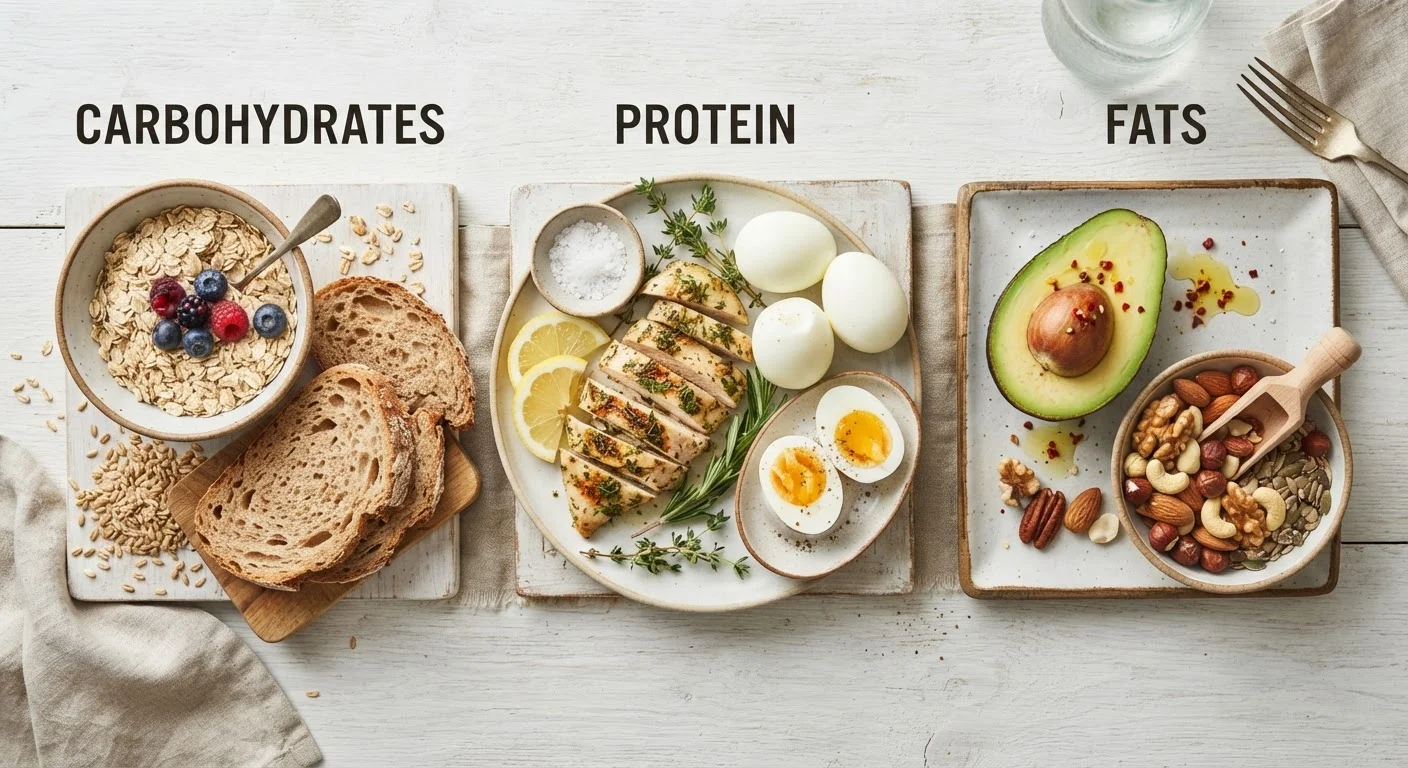
Photo: DockedReads.com | Information Made Easy editorial
Key Takeaways
- Carbohydrates are your body's preferred and most efficient fuel source.
- Protein provides the amino acids needed for tissue repair, immune function, and muscle building.
- Dietary fat supports hormone production, vitamin absorption, and long-term energy storage.
- All three macronutrients are necessary — no single one should be eliminated from a balanced diet.
- The proportion of each macronutrient matters less than the overall quality of food sources.
Why Macronutrients Matter
Every time you eat, you're supplying your body with a mix of three fundamental building blocks: carbohydrates, proteins, and fats. These are called macronutrients — "macro" because they're needed in large amounts compared to vitamins and minerals, which are explored in the companion article on micronutrients.
Understanding what each macronutrient does — and where it comes from — gives you a stronger foundation for making everyday food choices. It also helps you cut through the noise of nutrition headlines, which often pit one macronutrient against the others. For a broader look at how dietary guidance is formed, see why nutrition guidance feels confusing.
45–65%
Recommended share of calories from carbohydrates
According to the Dietary Guidelines for Americans, carbohydrates should make up roughly 45–65% of total daily caloric intake for adults.
4 kcal/g
Energy yield per gram for carbs and protein
Both carbohydrates and protein supply 4 calories per gram, while fat supplies 9 — a fundamental fact in nutritional science.
9
Essential amino acids humans must obtain from food
Of the 20 amino acids the body uses, 9 cannot be synthesised internally and must come from dietary protein sources.
Carbohydrates: Your Body's Preferred Fuel
Carbohydrates are the body's fastest and most efficient energy source. When you eat carbs — whether from bread, fruit, rice, or beans — they are broken down into glucose, which circulates in the bloodstream and powers cells throughout your body, especially the brain and red blood cells.
Not all carbohydrates work the same way. Simple carbohydrates (like those in sugary drinks and white bread) digest quickly, causing a rapid rise in blood sugar. Complex carbohydrates (whole grains, legumes, vegetables) digest more slowly and provide a steadier energy release. Fiber — a form of carbohydrate your body cannot fully digest — supports gut health, slows glucose absorption, and contributes to feelings of fullness.
Cutting carbohydrates entirely is generally unnecessary for healthy adults and can make it harder to meet fiber and micronutrient needs. Quality matters more than elimination.
Choose Whole Food Carb Sources First
Protein: The Body's Builder and Repairer
Protein is made up of smaller units called amino acids, which the body uses to build and repair tissues, produce enzymes and hormones, support immune function, and maintain muscle mass. Of the 20 amino acids the body uses, nine are considered essential — meaning the body cannot synthesise them on its own and must obtain them through food.
Animal-sourced foods (meat, poultry, fish, eggs, dairy) generally provide all nine essential amino acids in adequate proportions — often called "complete" proteins. Many plant sources can be combined across a day's meals to achieve the same coverage. Common nutrition myths — such as the idea that plant protein is inherently inferior — don't hold up well against current evidence.
Fats: More Than Just Stored Energy
Dietary fat has a complicated reputation, but it performs critical functions the body cannot skip. Fat is required for absorbing fat-soluble vitamins (A, D, E, and K), producing steroid hormones (including estrogen and testosterone), maintaining cell membrane integrity, and providing a concentrated source of long-term energy.
The type of fat consumed shapes its health impact. Unsaturated fats — found in olive oil, avocados, nuts, and fatty fish — are associated with heart-protective effects. Saturated fats (in red meat and full-fat dairy) warrant more moderation according to major health organisations, though research is nuanced. Trans fats, largely eliminated from the US food supply following regulatory action, are associated with elevated cardiovascular risk and are best avoided.
Understanding how fat interacts with total calorie intake is part of the broader picture covered in understanding calories and energy balance.
“The single best dietary pattern emphasises vegetables, fruits, whole grains, beans, nuts, and healthy oils — with evidence pointing to food quality over any single nutrient as the key driver of health.”
— Walter Willett, Professor of Epidemiology and Nutrition, Harvard T.H. Chan School of Public Health
Putting It All Together
There is no universally correct ratio of macronutrients. General dietary guidelines suggest carbohydrates provide roughly 45–65% of total daily calories, fat 20–35%, and protein 10–35% — but these are ranges, not rigid targets, and individual needs vary based on age, activity level, health status, and personal goals.
The most consistent finding in nutrition research is that food quality matters more than hitting a precise macronutrient split. A diet built around whole grains, vegetables, legumes, lean proteins, and healthy fats naturally distributes macronutrients in reasonable proportions — without requiring detailed tracking for most people.
Learning to read a nutrition label can also help you understand the macronutrient composition of packaged foods. The guide on reading a nutrition label is a practical next step.
Individual Needs Vary Considerably
This article provides general nutrition information for educational purposes only and is not a substitute for advice from a qualified healthcare provider or registered dietitian.
Frequently Asked Questions
The content on this site is for informational purposes only and is not a substitute for professional advice. Always consult a qualified professional for guidance specific to your situation.