
Building a Movement Habit When You Sit at a Desk All Day

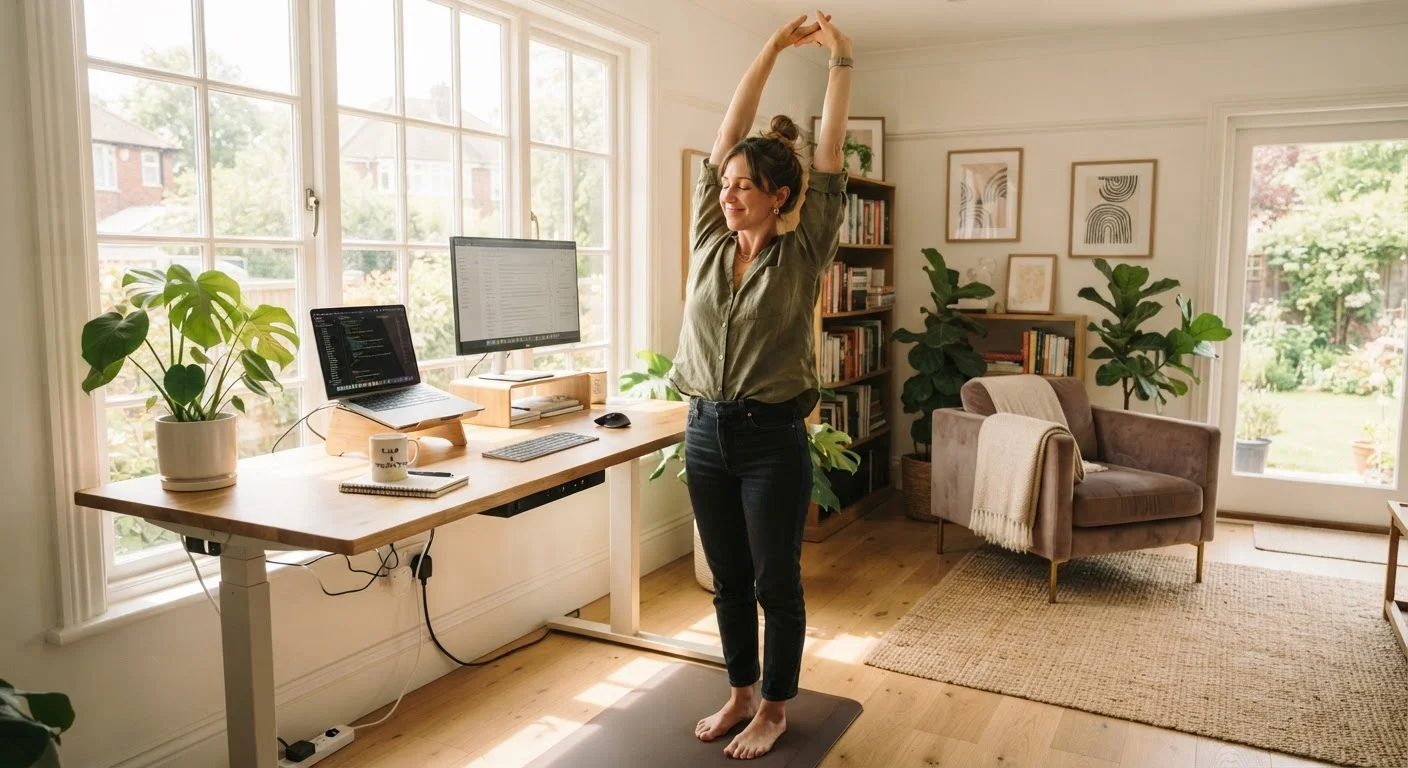
Photo: DockedReads.com | Information Made Easy editorial
Key Takeaways
- Prolonged sitting is linked to metabolic and musculoskeletal health risks, even for people who exercise regularly.
- Short, frequent movement breaks are more sustainable than trying to compensate with one long workout.
- Habit stacking — anchoring movement to existing routines — is one of the most evidence-supported strategies for consistency.
- You do not need a gym, equipment, or large blocks of time to make meaningful progress.
- Environmental cues and scheduled reminders dramatically improve follow-through for movement habits.
Why Sitting All Day Is a Distinct Health Concern
Many people assume that an evening workout cancels out a day spent seated. The research picture is more nuanced. Extended uninterrupted sitting has been associated with metabolic changes — including shifts in blood sugar regulation and circulation — that occur largely independently of total weekly exercise volume. This does not mean gym sessions are irrelevant; they matter. But they do not fully offset what happens to the body during long, unbroken sedentary periods.
The good news is that the solution does not require heroic effort. Studies published in peer-reviewed journals have consistently found that even short standing or walking breaks distributed throughout the day can help interrupt these physiological patterns. Movement does not need to be strenuous to be beneficial — it needs to be frequent. This is particularly relevant as movement needs evolve over a lifetime; our guide on physical activity across every decade of adult life outlines how priorities shift as you age.
Reframe Movement as Maintenance, Not Exercise
The mental health dimension is equally important. Regular movement breaks have been linked in multiple studies to improved mood, reduced work-related stress, and better sustained attention. Building this kind of routine can complement broader well-being goals — something explored in depth in our article on sustainable habits that support mental well-being.
What You Need Before You Start
One of the barriers to building a movement habit is the assumption that it requires special equipment or a significant time investment. In reality, the prerequisites are minimal.
What you will need
Phone or Smartwatch Timer
Set repeating reminders every 30–60 minutes to prompt movement breaks throughout the workday.
Standing Desk or Desk Converter
Allows you to alternate between sitting and standing positions without leaving your workstation.
Resistance Band
Enables simple seated or standing stretches and light strengthening exercises without leaving your desk area.
If your work sometimes takes you away from your normal environment — travel, remote sites, or extended trips — many of these same strategies transfer. Our article on keeping up physical activity when your routine is gone covers adaptable approaches that work anywhere.
This Is General Information, Not Medical Advice
Step-by-Step: Building Your Desk Movement Habit
Follow these steps sequentially. Each one builds on the last, and together they form a practical, customizable system you can begin implementing today.
Audit How Much You Currently Move
Before building new habits, get an honest baseline. For one or two typical workdays, note roughly how long you sit without standing. Most people are surprised to find stretches of three or four hours pass without any movement at all. A step-counting app or wearable device can help, but a simple pen-and-paper log works just as well. You are looking for your longest unbroken sitting blocks — those are your highest-priority targets.
Set a Maximum Sitting Threshold
Public health guidance from organizations including the World Health Organization consistently recommends breaking up prolonged sitting regardless of overall daily activity. A practical target used by many occupational health programs is to stand or move briefly at least once every 30 to 60 minutes. Set a recurring timer on your phone or computer to serve as your prompt. Do not rely on memory — the reminder is the habit trigger.
Choose Two or Three Micro-Movements to Rotate
When the timer goes off, you need a clear, low-friction action ready. Pick two or three options so you are not deciding in the moment. Good candidates include: standing and doing ten slow calf raises, walking to a window or to refill a water bottle, doing a brief seated spinal twist, or standing for a two-minute shoulder roll sequence. Keeping your movements varied prevents boredom and works different muscle groups over the course of the day.
Stack Movement onto Existing Habits
Habit stacking — linking a new behavior to something you already do reliably — is one of the most robust techniques in behavioral science for building durable routines. Identify two or three things you already do every workday without thinking: brewing coffee, joining a morning standup call, eating lunch, or printing a document. Attach a specific movement to each. For example: every time you finish a video call, stand and do a 60-second walk around your space before starting the next task. The existing habit becomes the trigger for the new one.
Build in a Dedicated Midday Movement Block
Micro-breaks accumulate meaningfully, but a slightly longer midday movement window — even 10 to 15 minutes — provides additional physiological and cognitive benefits. A brisk walk around the block, a short stretching sequence, or a brief bodyweight routine all qualify. The key is to treat this block as a non-negotiable appointment, not a reward contingent on finishing tasks. Block it on your calendar the same way you would a meeting. For ideas on lower-impact options that work for a range of fitness levels, see low-impact movement options that can easily fit a lunch break.
Review and Adjust Weekly
At the end of each week, spend five minutes reflecting: Which prompts did you follow through on? Which did you ignore? What got in the way? Adjust your timers, movement choices, or habit stacks based on what you learn. This review loop is what separates habits that last from intentions that fade. As explored in our piece on consistency over intensity, showing up reliably — even imperfectly — compounds over time in ways that sporadic effort does not.
Don't Try to Change Everything at Once
The content on this site is for informational purposes only and is not a substitute for professional advice. Always consult a qualified professional for guidance specific to your situation.