
Southeast Asia's Lesser-Known Mainland: Laos at a Glance

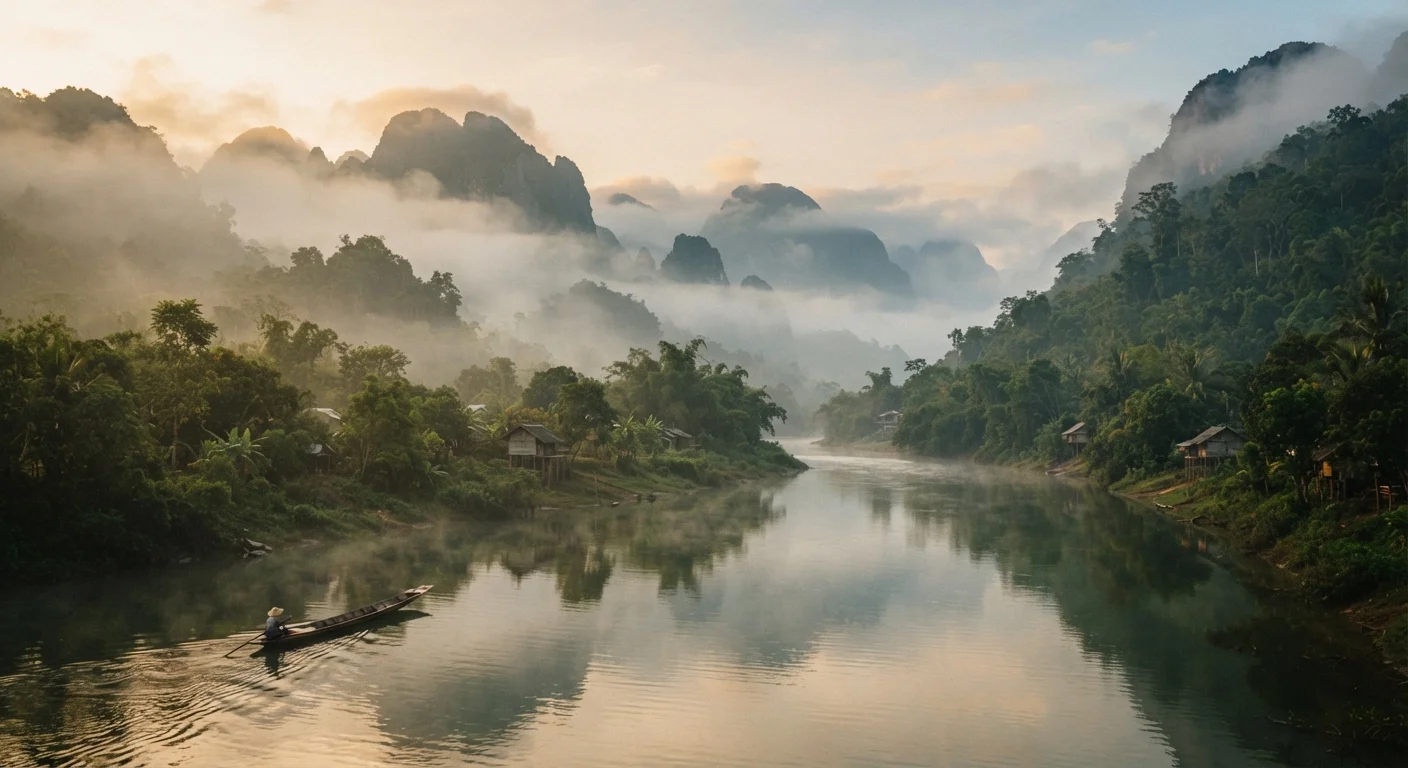
Photo: DockedReads.com | Information Made Easy editorial
What Laos Actually Is — and Isn't
Sandwiched between Thailand, Vietnam, Cambodia, China, and Myanmar, Laos is the only landlocked country in Southeast Asia — a geographic fact that has shaped its history, economy, and pace of life in ways that immediately set it apart from its coastal neighbours. It isn't a beach destination. It isn't a city-break destination in the way Bangkok or Ho Chi Minh City might be. What Laos offers instead is something rarer: slow rivers, forested mountains, ancient temples in small towns, and a cultural texture that hasn't yet been smoothed down by decades of package tourism.
The country's full name — the Lao People's Democratic Republic — signals its political character. It is a single-party socialist state that has maintained tight governance while cautiously opening to foreign visitors since the 1990s. Travellers should approach it as a place with its own rules and rhythms, not simply an extension of a Thai itinerary.
| Capital city | Vientiane |
| Official language | Lao |
| Currency | Lao kip (LAK) |
| Geography | Landlocked; borders Thailand, Vietnam, Cambodia, China, Myanmar |
| Primary river | Mekong River (runs the length of the country) |
| UNESCO World Heritage site | Town of Luang Prabang (designated 1995) (UNESCO World Heritage List) |
| Visa for U.S. citizens | Visa on arrival available at major entry points (verify before travel) (U.S. Department of State) |
| Best travel season (general) | November to February (cool dry season) |
Regions Worth Knowing Before You Go
Laos divides naturally into three broad travel zones, each with a different personality. The north — anchored by Luang Prabang, a UNESCO World Heritage city where saffron-robed monks collect alms at dawn along quiet streets — is the most visited region and for good reason. The landscape here is mountainous, the hill-tribe villages are culturally rich, and the Mekong River provides a natural orientation point.
The central region, including the capital Vientiane, is often overlooked. Vientiane is one of Asia's smallest and most unhurried capitals — visitors expecting a metropolis are frequently surprised by its village-like scale. The Bolaven Plateau in the south-central area is notable for its coffee production and waterfalls.
The south offers the 4,000 Islands (Si Phan Don) zone on the Mekong, where life moves at river speed and the rare Irrawaddy dolphin can still occasionally be spotted. This region draws travellers seeking genuine stillness rather than sights.
Mekong River
One of the world's great rivers, flowing through six countries including the length of Laos. It serves as both a geographic spine and a practical transport corridor, especially in the south.
Lao PDR
The official name of Laos: the Lao People's Democratic Republic. It is a single-party state governed by the Lao People's Revolutionary Party.
Baci ceremony
A traditional Lao blessing ritual in which white strings are tied around a guest's wrists to wish them health and good fortune. Visitors may be invited to participate at community events.
Tak Bat
The early-morning almsgiving procession in which Buddhist monks collect food offerings from laypeople. Most visibly observed in Luang Prabang; visitors are asked to observe quietly and respectfully.
Bolaven Plateau
A high-altitude plateau in southern Laos known for its cool climate, waterfalls, and coffee cultivation. It is a distinct microclimate compared to the lowland river valleys.
Si Phan Don
Meaning 'Four Thousand Islands' in Lao, this is a widening of the Mekong River in the far south, dotted with islands and popular for slow-travel experiences.
Entry, Visas, and Practical Realities
Most American passport holders can obtain a visa on arrival at major ports of entry, including Wattay International Airport in Vientiane and the Friendship Bridge crossings from Thailand. Visa-on-arrival fees and requirements can change; always verify current conditions through the U.S. Department of State and official Lao immigration sources before travelling.
The currency is the Lao kip (LAK), though Thai baht and U.S. dollars circulate widely in tourist areas. ATM access outside of cities and larger towns can be limited, making it wise to carry sufficient cash when venturing into rural areas. Mobile data coverage is reasonable in population centres but drops significantly in mountainous regions.
Health preparation matters here. Consult a travel medicine professional well in advance — vaccinations for hepatitis A, typhoid, and other conditions are commonly recommended for the region, and malaria prophylaxis may be advised depending on itinerary. Food and water safety requires attention: stick to bottled or properly treated water throughout your stay.
Check Conditions Before You Book
This article provides general travel information only. Entry requirements, health recommendations, and local conditions can change. Always verify visa rules, safety advisories, and health guidance with official U.S. government sources and a qualified travel health professional before your trip.
The content on this site is for informational purposes only and is not a substitute for professional advice. Always consult a qualified professional for guidance specific to your situation.