
Iceland in Winter: The Honest Trade-Offs of Travelling in the Dark Season

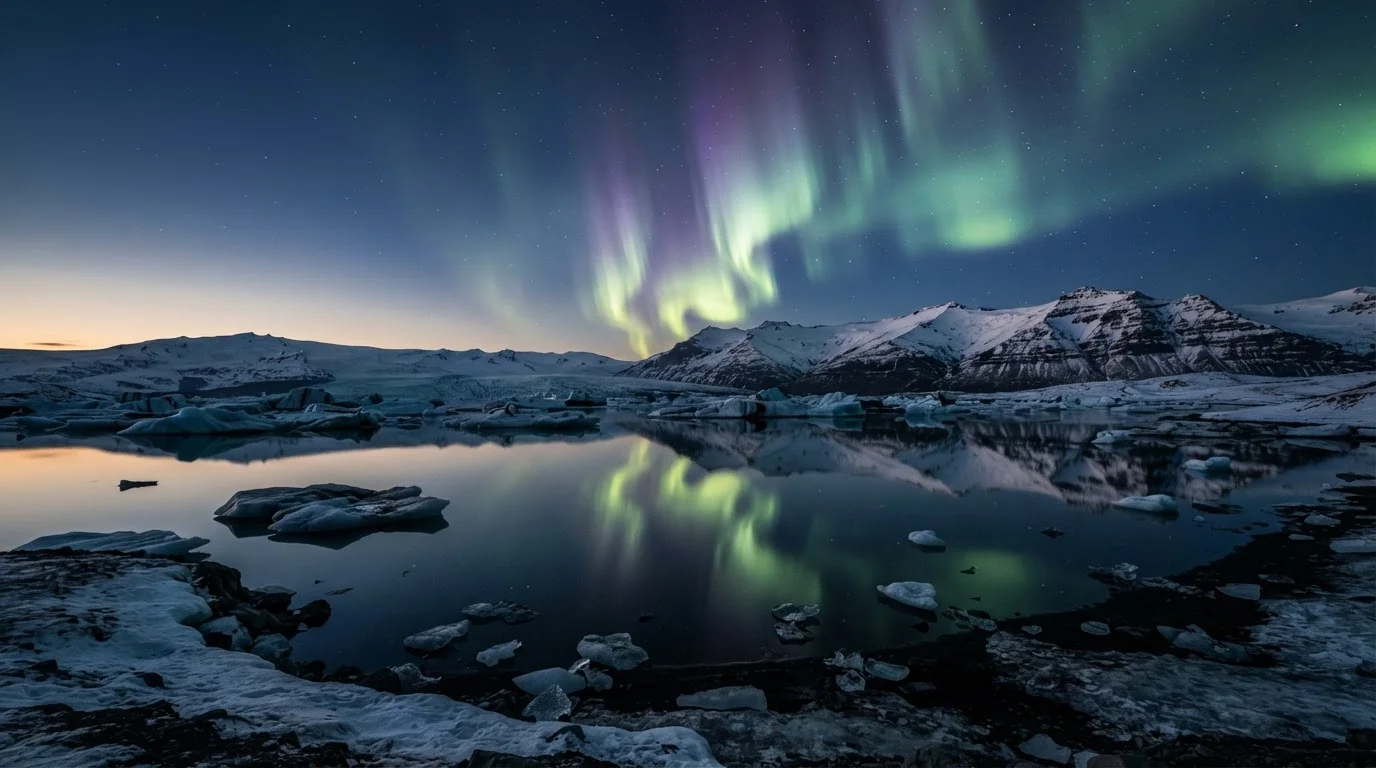
Photo: DockedReads.com | Information Made Easy editorial
Key Takeaways
- Iceland in winter offers roughly four to six hours of usable daylight, depending on your timing and latitude.
- Northern lights visibility is highest from late September through late March, but clear skies are never guaranteed.
- Highland roads and many mountain routes are closed from roughly November through May due to snow and ice.
- Winter travel can be significantly less crowded than summer, particularly at iconic sites like the Golden Circle.
- Weather conditions can change rapidly; flexible itineraries and proper gear are essential safety considerations.
Prime aurora borealis viewing season
Iceland's position within the auroral oval makes winter the only viable season for northern lights sightings, with the darkest months offering the longest potential viewing windows each night.
Dramatically fewer crowds at major sites
Popular attractions like Gullfoss and Þingvellir see a fraction of summer visitor numbers, allowing for a more immersive, unhurried experience of Iceland's most iconic landscapes.
Unique, otherworldly winter scenery
Snow-draped lava fields, frozen waterfalls, and steam rising from hot springs against a cold sky create landscapes visually distinct from the green-and-midnight-sun Iceland of summer.
Low-angle golden light for photography
The sun's shallow arc across the winter sky produces soft, golden-hour light for much of the short day, a quality that landscape photographers specifically travel to Iceland in winter to capture.
Geothermal pools are most atmospheric in cold weather
Outdoor hot pools and geothermal bathing areas take on a particularly dramatic character in winter, with steam rising against dark skies and snow-covered surroundings.
Only four to six hours of usable daylight
Near the winter solstice, Reykjavík sees barely four hours between sunrise and sunset, fundamentally limiting how much sightseeing is possible in natural light each day.
Highland roads closed through spring
All F-roads and highland interior routes — including popular areas like Landmannalaugar — are inaccessible from roughly November through late May or early June, significantly restricting where travelers can go.
Rapidly changing, potentially dangerous weather
Storm conditions can ground flights, close roads, and make outdoor activity hazardous with little warning; travelers without itinerary flexibility may find significant disruption.
Aurora sightings are never guaranteed
Cloud cover, storm systems, and variable solar activity mean many visitors spend multiple nights hoping for the aurora and see nothing; managing expectations is essential.
Driving on ice requires real experience
Winter road conditions in Iceland demand familiarity with ice driving, and travelers without that experience face genuine safety risks when self-driving outside the capital area.
Extended darkness can be emotionally taxing
Some travelers find prolonged low light and early nightfall unexpectedly draining; this is a personal factor worth honestly weighing before committing to a midwinter trip.
What 'Winter' Actually Means in Iceland
Iceland's winter season runs roughly from November through March, though Icelanders themselves often speak of darkness beginning far earlier. By late November in Reykjavík, sunrise may come around 11 a.m. and sunset by 3:30 p.m. — a window that narrows further as December approaches. In the northernmost reaches of the country, near Akureyri, polar nights mean the sun barely clears the horizon at all around the solstice.
This isn't a detail to gloss over. American travelers accustomed to planning an eight-hour sightseeing day will need to fundamentally recalibrate expectations. What winter Iceland offers instead is a specific quality of light — low-angled, golden, and fleeting — that landscape photographers actively seek out. The trade-off is structural: you get fewer hours, but the hours you do get are often extraordinary.
Daylight Varies Significantly by Region
The Case For Going in Winter
The northern lights are the most cited reason, and the reason is legitimate. Iceland sits inside the auroral oval, the atmospheric band where charged solar particles produce those famous green and violet displays. Darkness is a prerequisite, which means winter is the only viable season. Sightings depend on solar activity, cloud cover, and distance from light pollution — none of which are controllable — but your statistical chances are meaningfully higher between October and March than at any other time.
Beyond the aurora, winter strips Iceland of its summer crowds. The Golden Circle — a loop connecting Þingvellir National Park, the Geysir geothermal area, and Gullfoss waterfall — draws enormous summer traffic. In February, the same route feels quieter, more contemplative. Accommodation prices tend to ease outside peak summer, and the landscape itself takes on a different character: frozen waterfalls, black sand beaches edged with ice, and geothermal pools steaming against clear cold air.
Prime aurora borealis viewing season
Iceland's position within the auroral oval makes winter the only viable season for northern lights sightings, with the darkest months offering the longest potential viewing windows each night.
Dramatically fewer crowds at major sites
Popular attractions like Gullfoss and Þingvellir see a fraction of summer visitor numbers, allowing for a more immersive, unhurried experience of Iceland's most iconic landscapes.
Unique, otherworldly winter scenery
Snow-draped lava fields, frozen waterfalls, and steam rising from hot springs against a cold sky create landscapes visually distinct from the green-and-midnight-sun Iceland of summer.
Low-angle golden light for photography
The sun's shallow arc across the winter sky produces soft, golden-hour light for much of the short day, a quality that landscape photographers specifically travel to Iceland in winter to capture.
Geothermal pools are most atmospheric in cold weather
Outdoor hot pools and geothermal bathing areas take on a particularly dramatic character in winter, with steam rising against dark skies and snow-covered surroundings.
The Honest Challenges You Should Plan Around
Road conditions are the most serious practical constraint. Iceland's highland interior — the Landmannalaugar region, the Kjölur route, and virtually all F-roads — closes completely in winter and remains inaccessible until late spring or early summer, depending on snowfall. The Ring Road (Route 1) stays open year-round in principle, but sections in the East Fjords and around Mývatn can close temporarily after heavy snow or ice storms. The Icelandic Road and Coastal Administration website provides real-time conditions, and checking it before every drive is genuinely necessary, not optional.
Driving conditions also demand honest self-assessment. Rental cars are widely available, and 4WD vehicles with winter tires are strongly advisable for winter travel outside Reykjavík. Travelers unfamiliar with driving on ice should seriously consider guided tours for more remote routes rather than self-driving.
Then there is the emotional reality of darkness. Some visitors find the long nights atmospheric and cozy; others find them unexpectedly disorienting or low-energy. This is worth considering honestly before booking.
Only four to six hours of usable daylight
Near the winter solstice, Reykjavík sees barely four hours between sunrise and sunset, fundamentally limiting how much sightseeing is possible in natural light each day.
Highland roads closed through spring
All F-roads and highland interior routes — including popular areas like Landmannalaugar — are inaccessible from roughly November through late May or early June, significantly restricting where travelers can go.
Rapidly changing, potentially dangerous weather
Storm conditions can ground flights, close roads, and make outdoor activity hazardous with little warning; travelers without itinerary flexibility may find significant disruption.
Aurora sightings are never guaranteed
Cloud cover, storm systems, and variable solar activity mean many visitors spend multiple nights hoping for the aurora and see nothing; managing expectations is essential.
Driving on ice requires real experience
Winter road conditions in Iceland demand familiarity with ice driving, and travelers without that experience face genuine safety risks when self-driving outside the capital area.
Extended darkness can be emotionally taxing
Some travelers find prolonged low light and early nightfall unexpectedly draining; this is a personal factor worth honestly weighing before committing to a midwinter trip.
Planning Realistically: What to Prioritize
Concentrate your itinerary on accessible winter highlights: the South Coast (Seljalandsfoss, Skógafoss, the Jökulsárlón glacier lagoon), the Reykjanes Peninsula, the Snæfellsnes Peninsula, and the Blue Lagoon geothermal facility area. These routes remain accessible through winter and collectively offer a rich, varied experience without requiring highland access.
Build flexibility into your schedule in a way you might not for a summer trip. A day lost to a road closure or a storm isn't a failure — it's normal. Having a backup plan (a museum visit in Reykjavík, a hot spring soak, time in a guesthouse with local hosts) often produces the most memorable parts of an Icelandic winter trip anyway.
~4 hrs
Usable daylight near winter solstice in Reykjavík
Around December 21, Reykjavík sees approximately four hours between sunrise and sunset, according to Icelandic meteorological data.
Sept–Mar
Peak aurora viewing window in Iceland
The Icelandic Met Office identifies late September through late March as the period with sufficient darkness for aurora observation.
~100%
Highland F-roads closed during winter months
The Icelandic Road and Coastal Administration closes all interior F-roads in winter, typically from around November through late May or early June.
Finally, consider your window carefully. Mid-January through February offers the coldest temperatures but also some of the clearest skies statistically. Late October and early November balance manageable daylight with good aurora odds and fewer tourists than the December holiday rush.
This article provides general travel information. Conditions in Iceland — including road access, weather, and attraction availability — change frequently. Always verify current conditions through official Icelandic sources and your country's travel advisory before departing.
The content on this site is for informational purposes only and is not a substitute for professional advice. Always consult a qualified professional for guidance specific to your situation.