
Why Investors Panic-Sell — and What the Research Says About It

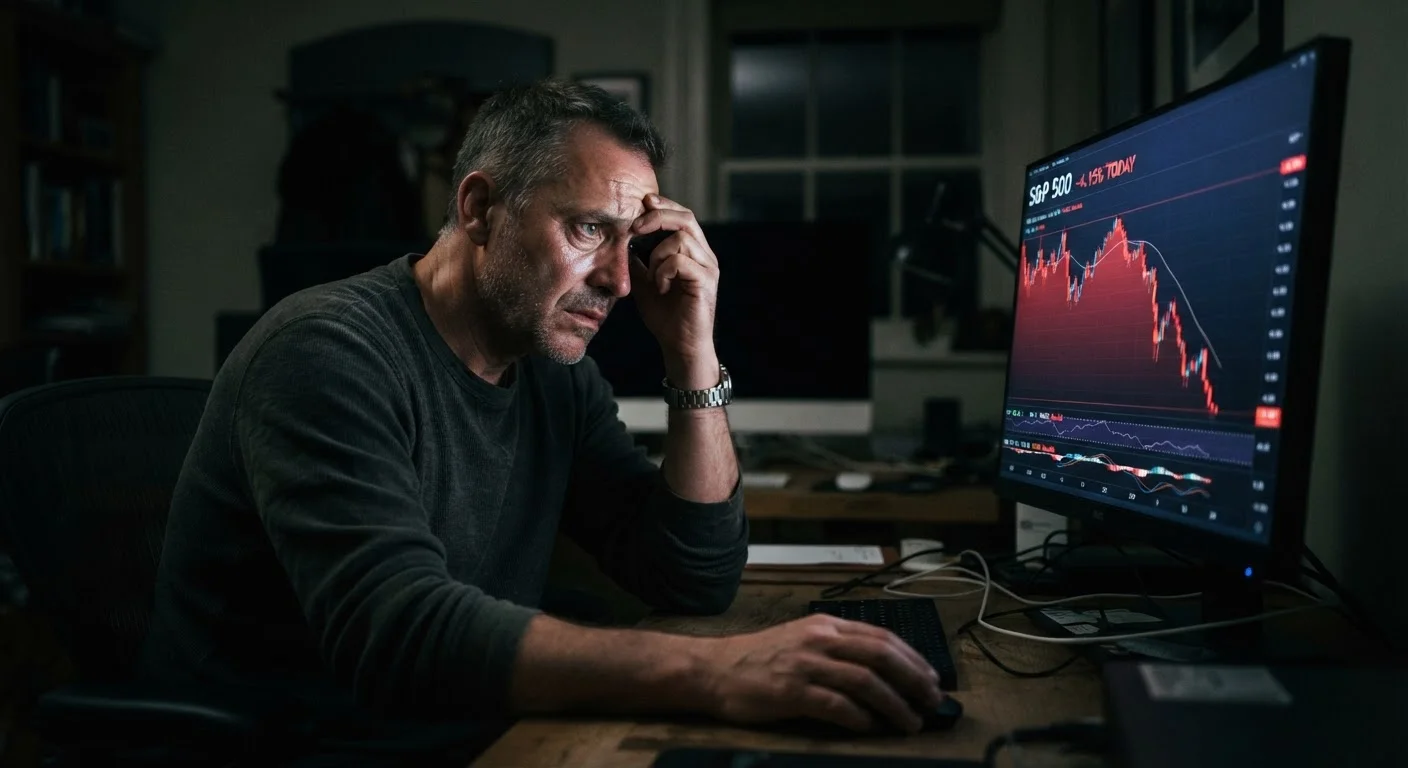
Photo: DockedReads.com | Information Made Easy editorial
Key Takeaways
- Panic-selling is driven by loss aversion, a well-documented cognitive bias where losses feel twice as painful as equivalent gains.
- Investors who sell during downturns often lock in losses and miss the fastest recovery days that follow.
- Research consistently shows that time in the market outperforms attempts to time the market.
- Having a written investment plan before volatility strikes dramatically reduces emotional decision-making.
- Consulting a qualified financial adviser can help you build a strategy resilient to emotional pressure.
The Psychology Behind the Urge to Sell
When financial markets drop sharply, millions of investors feel a powerful, visceral urge to act — specifically, to sell and move to cash. This impulse is not a character flaw. It is a predictable product of how the human brain processes threat and loss. Understanding the mechanics of panic-selling is the first step toward resisting it.
Behavioral finance research has identified loss aversion as a central driver. People feel the pain of a financial loss approximately twice as intensely as the pleasure of an equivalent gain. This asymmetry makes falling portfolio values feel genuinely dangerous, even when the investor has a long time horizon and no immediate need for the funds.
Compounding this is the role of social proof. When others around us appear to be selling — as financial media coverage during downturns consistently implies — the instinct to follow the crowd becomes powerful. This social dimension of panic is one reason market downturns can escalate into self-reinforcing cycles.
Financial Media Can Amplify Fear
It is worth noting that anxiety around financial uncertainty can intersect with broader emotional patterns. Patterns that quietly undermine emotional resilience — such as rumination and avoidance — can amplify the distress investors feel during volatile markets, making it harder to think clearly about long-term strategy.
Common Mistakes That Lock In Losses
Panic-selling rarely happens in a vacuum. It tends to follow a sequence of smaller errors that accumulate under pressure. Recognizing these mistakes in advance — rather than in the middle of a market crisis — gives investors the best chance of avoiding them.
Treating unrealized losses as real, permanent harm that demands immediate action.
Checking portfolio values multiple times a day during volatile periods.
Assuming the current downturn is uniquely severe and unlikely to recover.
Having no written plan before volatility arrives, leaving decisions to emotion in the moment.
Attempting to time re-entry into the market after selling out of fear.
If some of these patterns sound familiar, you are not alone. Many stem from investing myths that keep ordinary people on the sidelines — beliefs absorbed over time that feel intuitive but run counter to the evidence.
Panic-Selling Can Permanently Damage Your Returns
Building Habits That Outlast Market Turbulence
The antidote to panic-selling is not willpower in the moment — it is structure built before volatility arrives. Investors who navigate downturns most effectively tend to share a set of deliberate practices rather than simply stronger nerves.
2×
How much more painful losses feel than equivalent gains
Behavioral economists Kahneman and Tversky identified this asymmetry — known as loss aversion — as a foundational principle of prospect theory.
~20%
Of investors sold equities at market lows during past recessions
Studies of retirement account behavior during significant market downturns found a meaningful share of participants liquidated equity positions near or at the trough.
10 days
Best trading days that reshape long-term returns
Academic analysis of historical US equity market data shows that missing the ten best trading days in a decade can roughly halve cumulative returns compared to staying invested.
A written investment policy statement is among the most practical tools available to ordinary investors. When markets fall, having a documented rationale for your portfolio turns an emotionally charged moment into a procedural check: has anything in my plan actually changed? In most downturns, the honest answer is no.
Regular, automated contributions — when financially appropriate — also remove the decision-making burden that makes panic-selling possible. By committing in advance to invest a fixed amount on a schedule, you sidestep the question of whether now is a good time to invest.
For a more detailed look at the day-to-day practices that support long-term investing, see habits that support consistent, long-term investing. And if you are unsure whether your current allocation matches your actual risk tolerance, speaking with a licensed financial adviser before the next downturn is a practical and worthwhile step.
This article is for general informational and educational purposes only and does not constitute personalised financial or investment advice. Past market performance does not guarantee future results. Please consult a qualified financial adviser before making decisions about your own investments.
The content on this site is for informational purposes only and is not a substitute for professional advice. Always consult a qualified professional for guidance specific to your situation.