
What Actually Happens to Your Money When You Invest

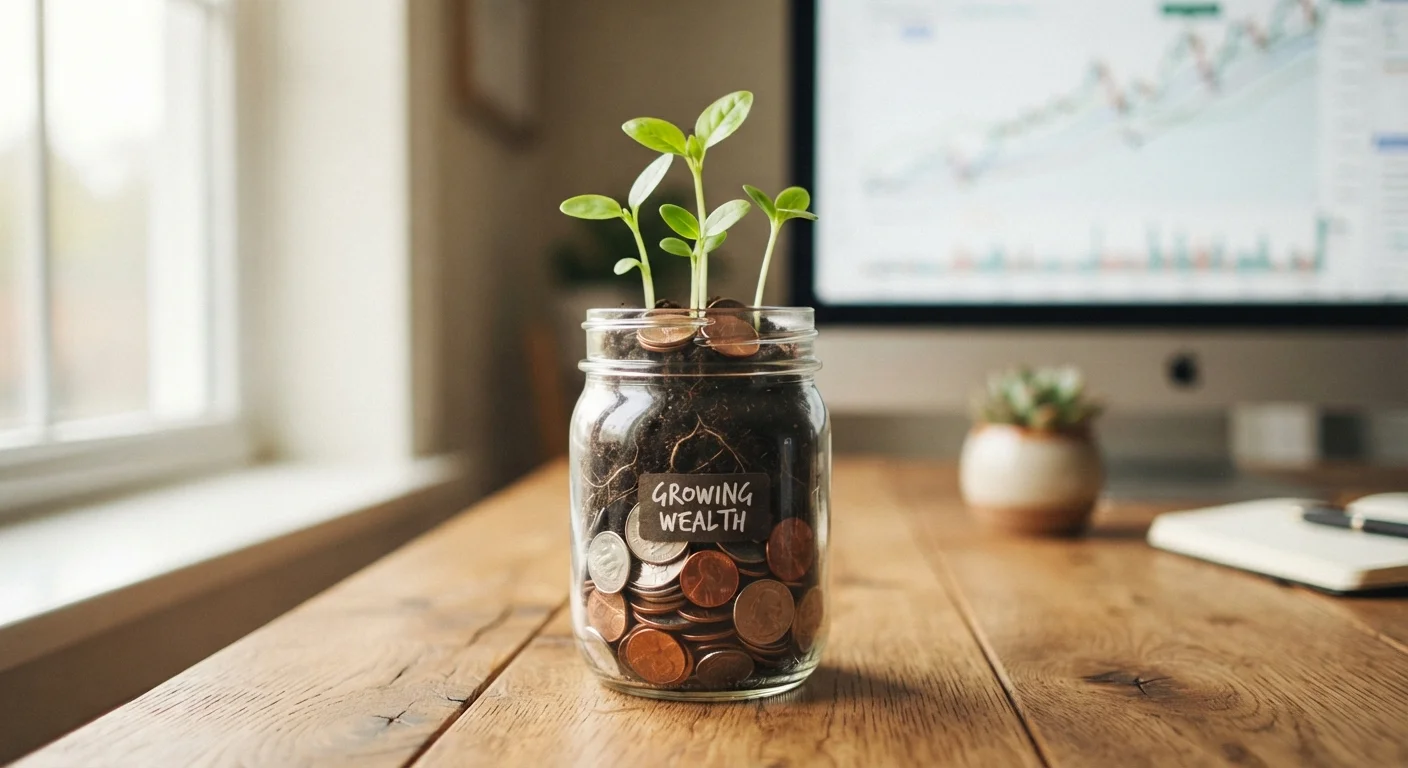
Photo: DockedReads.com | Information Made Easy editorial
Key Takeaways
- When you buy a stock, you become a partial owner of a real company with real assets.
- Most stock trades on exchanges are between investors, not directly with the company.
- Companies primarily raise money through initial share offerings, not secondary market trades.
- Bonds work differently — you're lending money to a government or corporation in exchange for interest.
- Investment returns are never guaranteed, and all investing involves risk of loss.
- Time in the market, not timing the market, is generally what drives long-term wealth building.
From Your Account to the Market: The Basic Flow
When you tap a button to invest $100 in a stock, that money doesn't disappear into abstraction. It travels through a clear — if fast-moving — chain of events. Your brokerage receives your order and routes it to an exchange or alternative trading venue. There, a seller on the other side of the transaction hands over shares in exchange for your cash.
That seller might be another individual investor, an institution like a pension fund, or a market maker — a firm whose job is to keep trading flowing smoothly. The key point is that in most everyday stock trades, you're buying shares from another investor, not from the company itself.
The company originally issued those shares when it went public through an initial public offering (IPO). That's when it actually raised money from investors. Everything after that — the buying and selling you see on exchanges daily — is secondary market activity. The company's balance sheet isn't directly affected by whether its share price rises or falls on a Tuesday afternoon.
$25 trillion+
US stock market total capitalization
The US equity market is one of the largest in the world, reflecting the scale of capital deployed by individual and institutional investors.
~55%
US adults who own stocks
According to Gallup polling, roughly 55–58% of American adults report owning stocks, either directly or through retirement accounts like 401(k)s.
~10%
Historical average annual US stock market return
The S&P 500 has historically averaged roughly 10% annually before inflation over long periods — though past performance does not guarantee future results.
What Owning a Stock Actually Means
A share of stock is a fractional ownership stake in a real business. Buy one share of a publicly listed company, and you legally own a tiny slice of its assets, earnings potential, and future. That ownership entitles you to a proportional cut of any dividends the company pays, and a vote at shareholder meetings (though small investors rarely hold enough shares for this to matter practically).
The price of that share fluctuates based on what buyers and sellers collectively believe the company is worth — influenced by earnings reports, economic conditions, interest rates, and market sentiment. When a company earns more money or investors grow more optimistic about its future, its share price tends to rise. When the opposite happens, prices fall.
This is why stock investing carries risk. You're not guaranteed a fixed return — you're betting that the business will be worth more in the future than it is today. For a deeper look at how different types of assets behave, see our guide to stocks, bonds, and funds.
“The stock market is a device for transferring money from the impatient to the patient.”
— Warren Buffett, Investor and Chairman of Berkshire Hathaway
Bonds and Funds: Different Mechanics, Same Core Idea
Not all investing works like buying stocks. When you invest in a bond, you're not buying ownership — you're lending money. Governments and corporations issue bonds to raise capital, promising to repay the principal at a set date and pay regular interest (called the coupon) in the meantime. Your return is largely predetermined, which makes bonds less volatile than stocks — though still not risk-free.
When you invest through a fund — whether a mutual fund or an exchange-traded fund (ETF) — your money is pooled with thousands of other investors. The fund uses that collective capital to buy a basket of securities. Index funds, a popular variety, simply mirror a market index like the S&P 500, buying proportional stakes in hundreds of companies at once. This built-in diversification means no single company's failure can wipe out your entire investment.
The returns you earn — whether through rising share prices, dividends, or bond interest — can then be reinvested, creating the compounding effect that underlies long-term wealth building. Our article on how compound interest rewards patient investors explores this dynamic in detail.
Reinvesting Returns Amplifies Growth Over Time
The Bigger Picture: Why It Matters
Understanding the mechanics of investing matters because it demystifies a process that many people find intimidating. Your money isn't vanishing into a casino — it's being directed toward real businesses, infrastructure projects, and economic activity. In return, you participate in whatever value that activity generates over time.
That said, markets are unpredictable in the short term. Prices can — and do — fall sharply. Investing is best approached with a long time horizon, realistic expectations, and genuine awareness of risk. Anyone who tells you that a particular investment is guaranteed to make money is not being accurate.
If you're exploring whether to start investing — or how — our beginner's guide to investing from zero covers the foundational steps. And if you're held back by common misconceptions, investing myths that keep people on the sidelines is worth a read before you decide anything.
This article is for general informational and educational purposes only and does not constitute personalized financial, investment, or tax advice. Consult a qualified financial adviser before making decisions about your own investments.
Frequently Asked Questions
The content on this site is for informational purposes only and is not a substitute for professional advice. Always consult a qualified professional for guidance specific to your situation.