
The Role of Inflation in Long-Term Investment Thinking

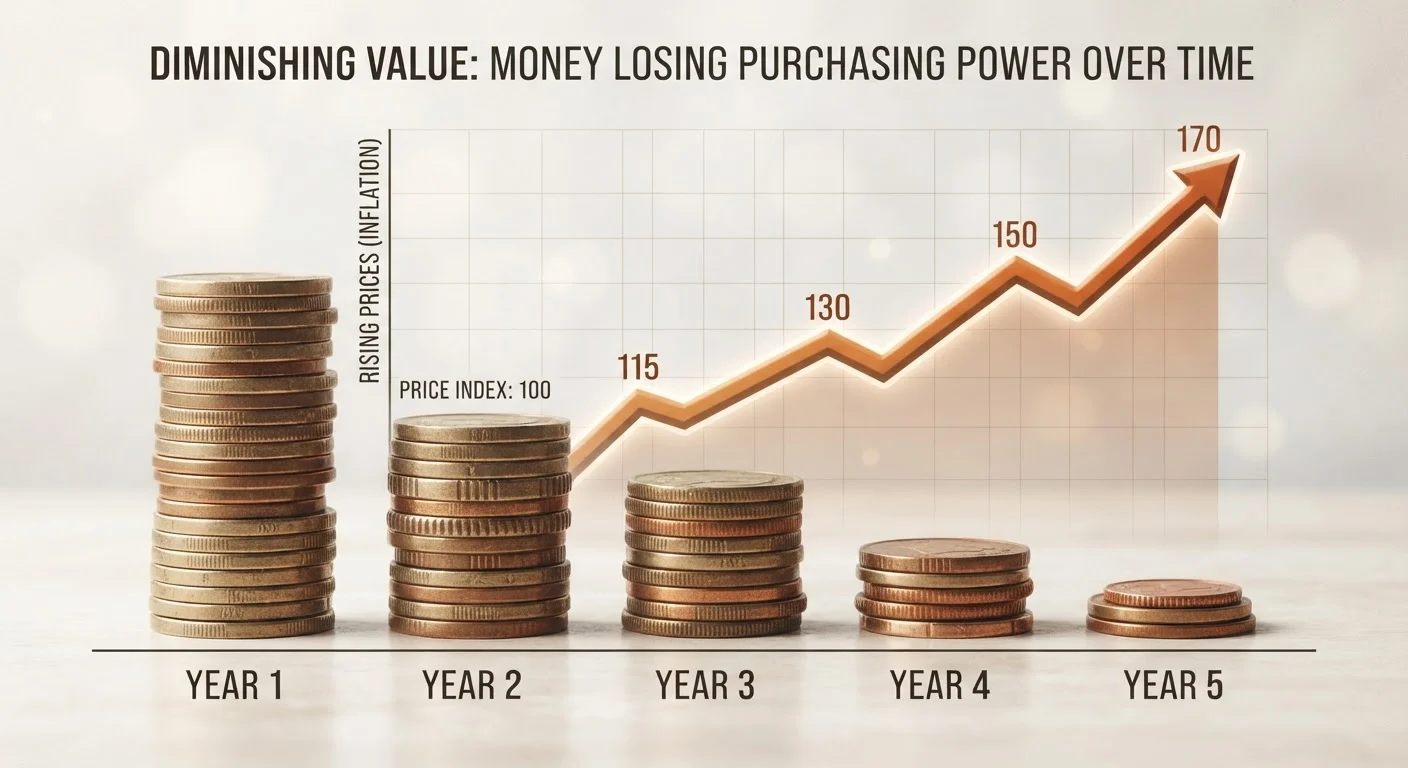
Photo: DockedReads.com | Information Made Easy editorial
Key Takeaways
- Inflation reduces the purchasing power of money held in cash or low-yield accounts over time.
- A nominal investment gain does not equal a real gain if inflation outpaces your return.
- Long-term investors must target returns that exceed the inflation rate to build genuine wealth.
- Certain asset classes have historically kept pace with or outpaced inflation better than others.
- Ignoring inflation is one of the most common — and costly — mistakes beginners make when planning for the future.
Why Inflation Is Every Investor's Silent Opponent
Most people understand inflation as rising prices at the grocery store. But for anyone thinking about long-term investing, inflation plays a more structural role — it quietly sets the bar that every investment must clear just to preserve your wealth, let alone grow it.
Consider a simple scenario: you leave $10,000 in a savings account earning 1% annually. After ten years, your balance has grown to roughly $11,046. That looks like progress. But if inflation averaged 3% per year over that same period, the purchasing power of your original $10,000 would require about $13,439 to match. In real terms, you've lost ground — despite nominally gaining money.
This gap between nominal and real returns is the crux of why inflation matters so much in investment thinking. Understanding when investing outperforms cash saving is a natural extension of grasping this concept.
3%
US long-run average annual inflation rate
The US long-run average CPI inflation rate has historically hovered near 3% per year, according to data from the U.S. Bureau of Labor Statistics going back decades.
~50%
Purchasing power lost over 24 years at 3% inflation
At a sustained 3% annual inflation rate, a dollar's purchasing power is roughly halved over approximately 24 years — illustrating how inflation compounds against savers.
2%
Federal Reserve's stated long-run inflation target
The U.S. Federal Reserve targets a long-run inflation rate of around 2%, using this as a benchmark for monetary policy decisions.
Nominal vs. Real Returns: The Number That Actually Matters
When financial educators talk about investment performance, they distinguish between two types of returns. A nominal return is the raw percentage your investment gained. A real return adjusts that figure for inflation, revealing what you actually gained in purchasing power.
If your portfolio returned 7% in a year when inflation ran at 4%, your real return was approximately 3%. That 3% represents genuine wealth creation. Everything else was simply keeping pace with rising prices.
This distinction carries enormous weight over long time horizons. Compound interest rewards patient investors, but inflation compounds too — working against you if your returns don't exceed it. Over 20 or 30 years, even a seemingly small inflation rate reshapes the real value of a portfolio dramatically.
“Inflation is the one form of taxation that can be imposed without legislation. It is a hidden tax on every dollar you hold.”
— Milton Friedman, Nobel Prize-winning economist and monetary theorist
How Inflation Shapes Smart Long-Term Investment Decisions
Recognising inflation as a permanent factor — not a temporary anomaly — changes how thoughtful investors approach long-term planning. Several key implications follow:
- Cash has a cost. Holding too much cash for too long is not a neutral position. In real terms, it is a slow loss. This is why financial planners often suggest that long-term money be put to work in assets with growth potential.
- Fixed income requires careful evaluation. A bond paying a fixed 3% coupon becomes a losing proposition in real terms if inflation rises to 4%. Investors in fixed-rate instruments need to weigh this risk honestly.
- Equity assets have historically offered inflation resilience. Over long periods, ownership stakes in productive businesses have tended to grow earnings alongside — and sometimes ahead of — inflation, though this comes with market risk and no guarantees.
- Goal projections must include inflation. If you're saving for a goal 20 years away, today's price tag is not tomorrow's cost. Adjusting projections for inflation prevents serious shortfalls.
Some financial habits can quietly amplify the inflation problem. Patterns that erode savings without obvious warning signs are worth understanding alongside inflation's impact.
Build Inflation Into Every Long-Term Goal
This article provides general financial information and education only. It is not personalised investment, tax, or financial advice. Please consult a qualified financial adviser before making decisions suited to your individual circumstances.
Frequently Asked Questions
The content on this site is for informational purposes only and is not a substitute for professional advice. Always consult a qualified professional for guidance specific to your situation.