
What a Personal Budget Actually Is (and What It Isn't)

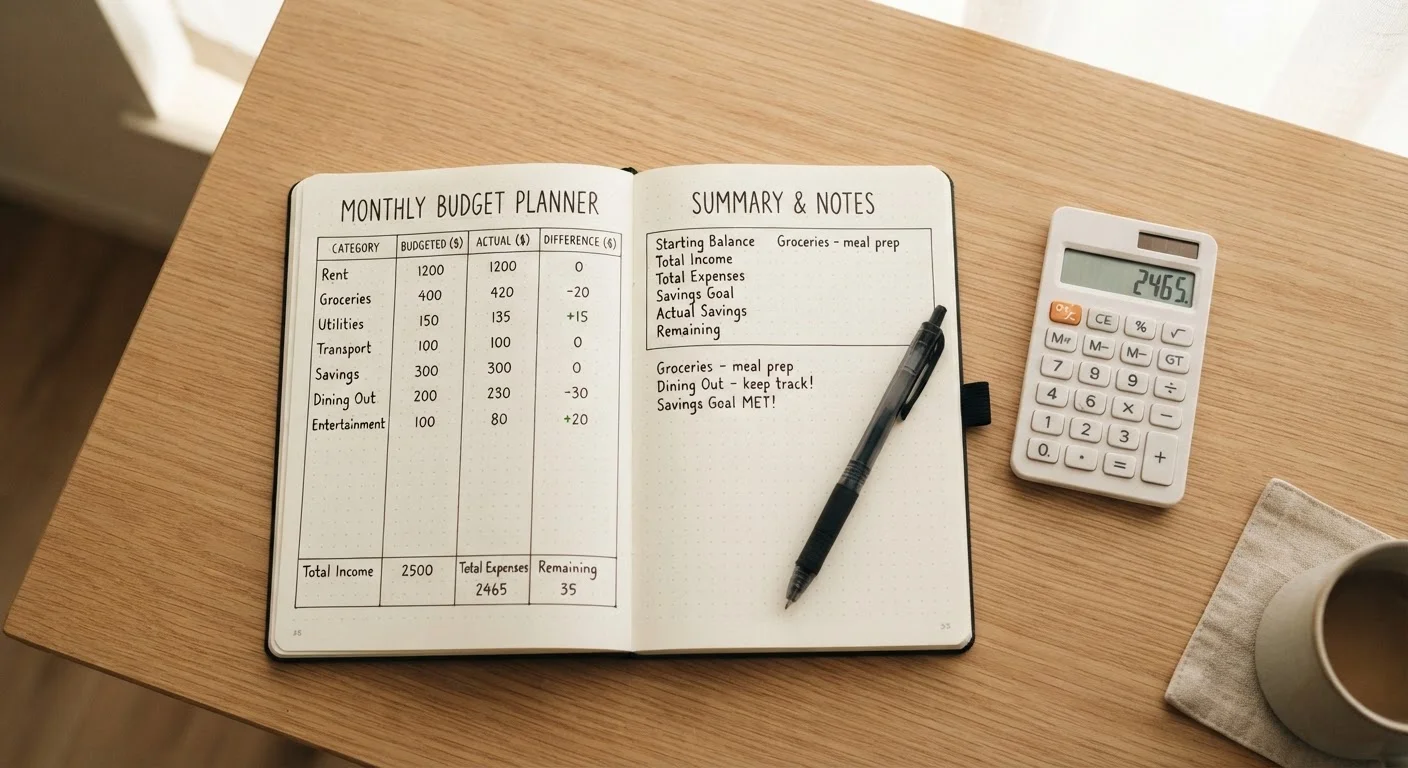
Photo: DockedReads.com | Information Made Easy editorial
Key Takeaways
- A budget is a spending and saving plan made in advance — not a record of the past.
- Budgets are about direction and priorities, not deprivation or punishment.
- Any income level can benefit from a budget; it isn't only for people in financial trouble.
- A budget must be revisited regularly to stay useful as life changes.
- Multiple valid budgeting methods exist — the best one is the one you'll actually use.
The Core Idea: A Plan, Not a Record
The most common misunderstanding about personal budgets is tense: people treat them as a record of past spending when they are actually a forward-looking plan. A budget answers the question, "What will I do with my money this month?" — before the month starts.
This distinction matters. Reviewing last month's bank statement tells you what happened; a budget gives you a target to aim at before the first dollar moves. The two activities complement each other, but only the second one is budgeting.
At its simplest, a personal budget has three moving parts: income (what comes in), expenses (what goes out), and the gap between them (what remains for saving, debt repayment, or other goals). Everything else — apps, spreadsheets, envelope systems — is just a delivery mechanism for that core structure.
Budget vs. Financial Plan: A Quick Distinction
What a Budget Is Not
Several persistent myths keep people from ever building a budget. Clearing them up is half the work.
- Not a punishment. A budget isn't a response to failure. It's a neutral tool that works equally well whether you're thriving or struggling financially.
- Not one-size-fits-all. There is no single correct budget format. Different methods suit different income patterns — a freelancer's budget will look very different from a salaried employee's.
- Not static. A budget written in January isn't meant to govern December. Life changes, and your budget should too.
- Not only for people in debt. People who feel financially comfortable often benefit most from budgeting because they have more choices to direct intentionally.
For a deeper look at these misconceptions, see common budgeting myths corrected.
Start With One Month, Not a Year
The Building Blocks: Income, Expenses, and Categories
A workable budget starts with your net income — the actual take-home pay that hits your account after taxes and deductions. Using gross income inflates the number you have to work with and leads to plans that don't hold up in practice.
Expenses fall into three broad types. Fixed expenses stay the same each month — rent or mortgage, loan payments, subscriptions. Variable expenses fluctuate but are still necessary — groceries, gas, utilities. Discretionary expenses are the flexible spending choices: dining out, entertainment, clothing beyond the basics. Understanding these categories helps you see where flexibility actually exists. A plain-language breakdown of all three expense types can help you sort your own spending confidently.
~33%
Americans with a detailed monthly budget
Gallup polling has consistently found that fewer than one in three U.S. adults maintains a detailed household budget, suggesting most people manage spending without a formal plan.
65%
Adults who say budgeting reduces financial stress
A survey by the National Foundation for Credit Counseling found a majority of adults who budget report it has a meaningful positive effect on their financial confidence and stress levels.
Once you've listed both sides — income and expenses — the math is straightforward. If expenses exceed income, adjustments are needed. If income exceeds expenses, the surplus needs a deliberate destination; otherwise it tends to disappear into unplanned spending.
Putting It Into Practice
Knowing what a budget is doesn't require a complex setup to get started. The most important move is simply writing something down — even a rough plan outperforms no plan.
If you've never built one before, a practical step-by-step walkthrough for beginners can walk you through each stage. And budgeting isn't limited to household finances — the same principles apply when planning for a specific goal, such as when you build a realistic travel budget to avoid coming home to a financial hangover.
For a complete, end-to-end resource covering everything from foundational concepts to long-term habits, the complete personal budgeting framework ties it all together.
This article is for general informational purposes only and does not constitute personalized financial advice. Consider consulting a qualified financial professional for guidance specific to your situation.
Frequently Asked Questions
The content on this site is for informational purposes only and is not a substitute for professional advice. Always consult a qualified professional for guidance specific to your situation.