
What R-Value Actually Means for Your Home's Insulation

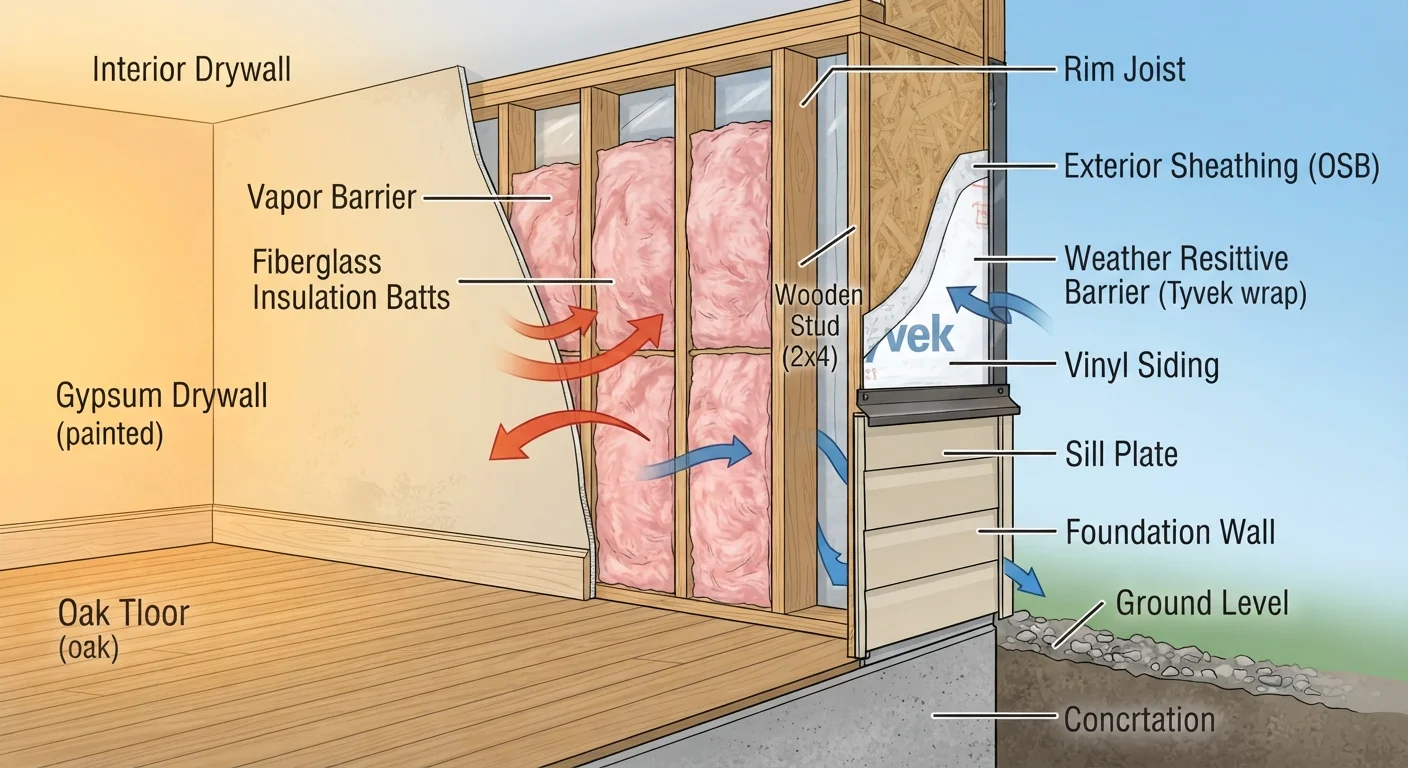
Photo: DockedReads.com | Information Made Easy editorial
Key Takeaways
- A higher R-value means stronger resistance to heat transfer and better insulation performance.
- Recommended R-values vary by climate zone, so location matters when choosing insulation.
- Attics typically need the highest R-values because heat rises and escapes most readily there.
- R-values are additive — layering insulation materials increases the total resistance.
- Proper installation is just as important as the R-value rating itself.
The Simple Science Behind the Number
Heat naturally moves from warm areas to cooler ones — from your heated living room toward a cold exterior wall, or from a hot summer attic down into your air-conditioned rooms below. Insulation slows that movement, and R-value is how we measure that slowdown.
Think of R-value like a traffic delay: a higher number means heat has a much harder time getting through. An R-13 wall cavity batt slows heat flow moderately, while R-49 attic insulation creates a far more stubborn barrier. Every point on the scale represents a measurable improvement in thermal resistance.
It's also worth knowing that R-values are additive. If you have R-19 existing insulation in your attic and add R-30 on top, your total becomes R-49. This makes upgrading existing insulation straightforward — you don't have to tear out what's already there.
R-Value Is Per Inch — or Per Product
Why Your Climate Zone Changes Everything
A home in Minneapolis, Minnesota needs considerably more insulation than one in Phoenix, Arizona. The U.S. Department of Energy divides the country into climate zones (1 through 8), and each zone carries specific R-value recommendations for different parts of your home.
90%
U.S. homes that are under-insulated
According to the North American Insulation Manufacturers Association (NAIMA), approximately 90% of existing U.S. homes lack adequate insulation.
Up to 30%
Home energy lost through poor insulation and air leaks
The U.S. Department of Energy estimates that air leaks and insufficient insulation account for up to 30% of a home's heating and cooling energy use.
R-49 to R-60
Recommended attic R-value for cold climates
The DOE's Energy Saver guidelines recommend R-49 to R-60 for attics in Climate Zones 5 through 8, covering most of the northern United States.
Generally speaking, the colder and more extreme your climate, the higher the R-value you need. Attics get the most attention because heat rises — and an under-insulated attic is one of the single biggest sources of energy loss in American homes. Walls, floors over unconditioned spaces, and basement rim joists each have their own targets too.
Before purchasing any insulation, look up your ZIP code on the DOE's online Zone Map or consult the EnergyStar guidelines. Buying the right R-value for your zone is more cost-effective than over- or under-insulating.
Common Insulation Types and Their R-Values
Different insulation materials achieve their R-value in different ways, and each suits certain applications better than others.
- Fiberglass batts: The familiar pink or yellow rolls. Typically R-2.9 to R-3.8 per inch. Easy for DIY wall and attic work.
- Blown-in fiberglass or cellulose: Loose-fill material blown into attics or enclosed cavities. Cellulose runs about R-3.2 to R-3.8 per inch and is often made from recycled paper.
- Rigid foam boards: Higher R-value per inch (R-3.8 to R-6.5 depending on type), making them useful where space is tight, such as basement walls or exterior sheathing.
- Spray polyurethane foam (SPF): Expands to fill gaps and can reach R-3.7 to R-6.5 per inch. Excellent for air sealing simultaneously. Installation typically requires a licensed contractor.
- Mineral wool (rock wool): Fire-resistant and moisture-tolerant. Approximately R-3.0 to R-3.3 per inch. Good for sound control as well.
Match the Material to the Location
Installation Quality Matters as Much as the Rating
A roll of R-19 insulation that's compressed, torn, or improperly fitted into a cavity will perform far below its rated value. Gaps, voids, and compression are the enemies of effective insulation.
When installing batts yourself, cut pieces to fit snugly without compressing the material — squishing fiberglass reduces its ability to trap air, which is what actually creates the thermal resistance. Batts should fill the full depth of the cavity and contact all six sides where possible.
For blown-in attic insulation, depth rulers (small plastic sticks placed before blowing) help verify you've reached the target depth. Many bags of loose-fill insulation include charts showing how many bags are required per square foot to reach a given R-value.
This article is for general informational and educational purposes only. For projects involving structural changes, electrical, or gas systems, always consult a licensed contractor and verify local building code and permit requirements before beginning work.
Frequently Asked Questions
The content on this site is for informational purposes only and is not a substitute for professional advice. Always consult a qualified professional for guidance specific to your situation.